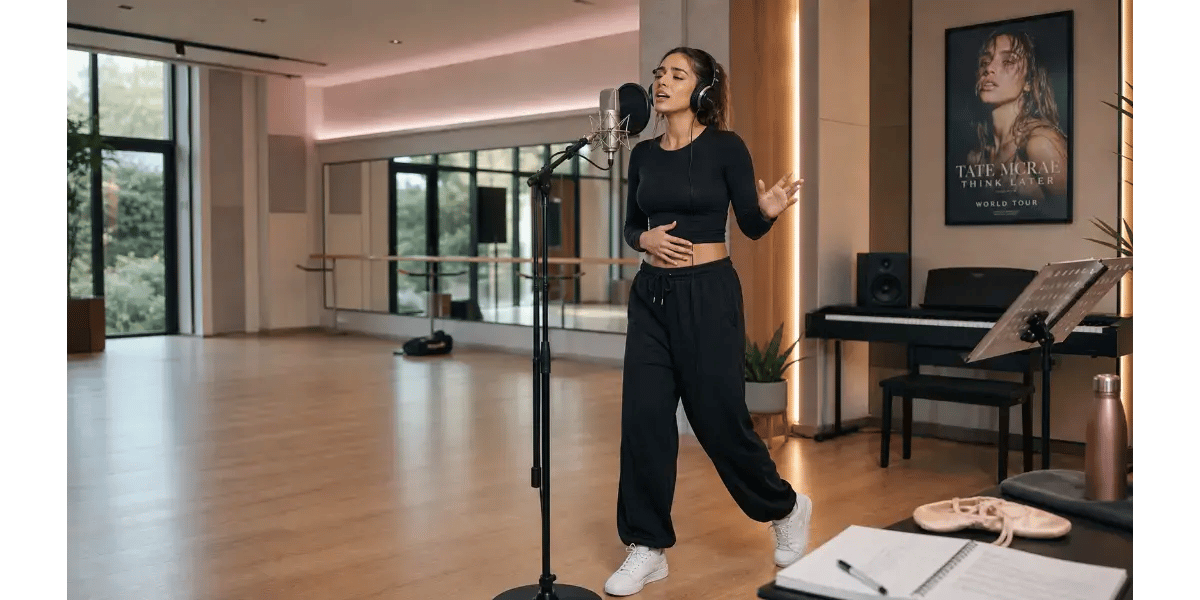
Constriction is a symptom telling us that the muscles in our larynx are not playing well together. What we might feel and experience:
- tight throat
- elevated larynx
- choking or closing or squeezing sensation
- fatigue with increasing discomfort when singing
As with all things, there is soreness and then there is soreness. Is yours the type that points to a technical problem or is it a side-effect of having overdone your normal, good singing?
Some types of fatigue and soreness might be an appropriate outcome of a really intense and healthy vocal workout, especially if our vocal muscles are doing certain movements for the first time. This kind of tiredness is a positive thing, like working muscles in the gym, and should not last long. If it does, you might ask yourself if you continued singing beyond the feeling of fatigue. Think about that and try to develop a better sense of knowing when to stop.
But when we speak about serious throat constriction, not tied to healthy "over use," that is another issue altogether. If you "always" go home from choir rehearsal in pain, or "always" have pain and tightness in a particular range, it is your job to take care of yourself by solving that problem.
Throat constriction you should be aware of is related to improper development and coordination of the closer and stretcher muscles. You know you are experiencing unhealthy tiredness and soreness when it lasts and/or gets worse, not better, as you workout over a couple of weeks and months. That is constriction setting in showing that you have inadvertently become "stuck" in a pattern. In this state you don't feel like you have the ability to change and you don't feel good when singing!
When this is the case, a knowledgeable vocal teacher will be able to diagnose the issue and prescribe certain exercises so that the muscles stop fighting. The teacher may suggest you focus on a certain falsetto feel to isolate and exercise the stretcher muscle which is in charge of the "head voice." Or you may need to start at the bottom and access a vigorous response from the closer muscle (arytenoid) that gives us what is called "chest voice." Often, it is a bit of both. The stretcher muscle and closer muscle need to be used in isolation in a healthy manner so that they are doing their respective jobs, not fighting one another. Then, as this becomes more habitual, the muscles can start to coordinate and learn how to be friends. When the muscles that adjust the vocal cords for pitch are playing nice, then throat constriction disappears.
By the way, the absence of throat constriction is sometimes called an “open throat” but you don’t have to do anything to get your throat open - no excessive yawning or the like. Your throat is naturally open and free of constriction when the arytenoid and crico-thyroid muscle systems are functioning well.
Functional freedom is always the goal.