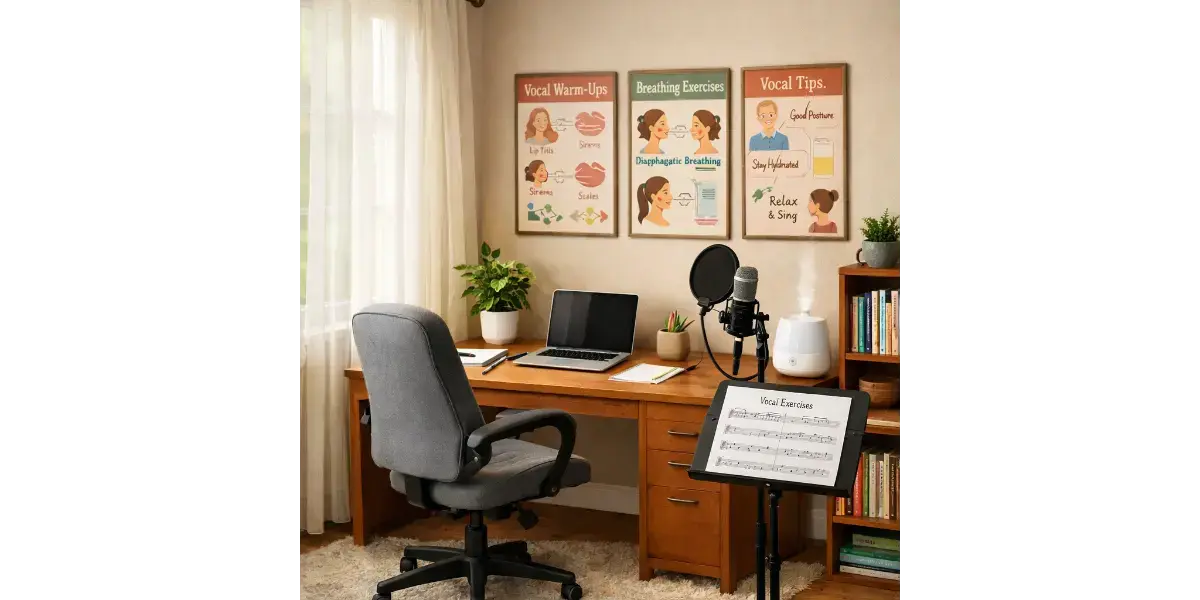
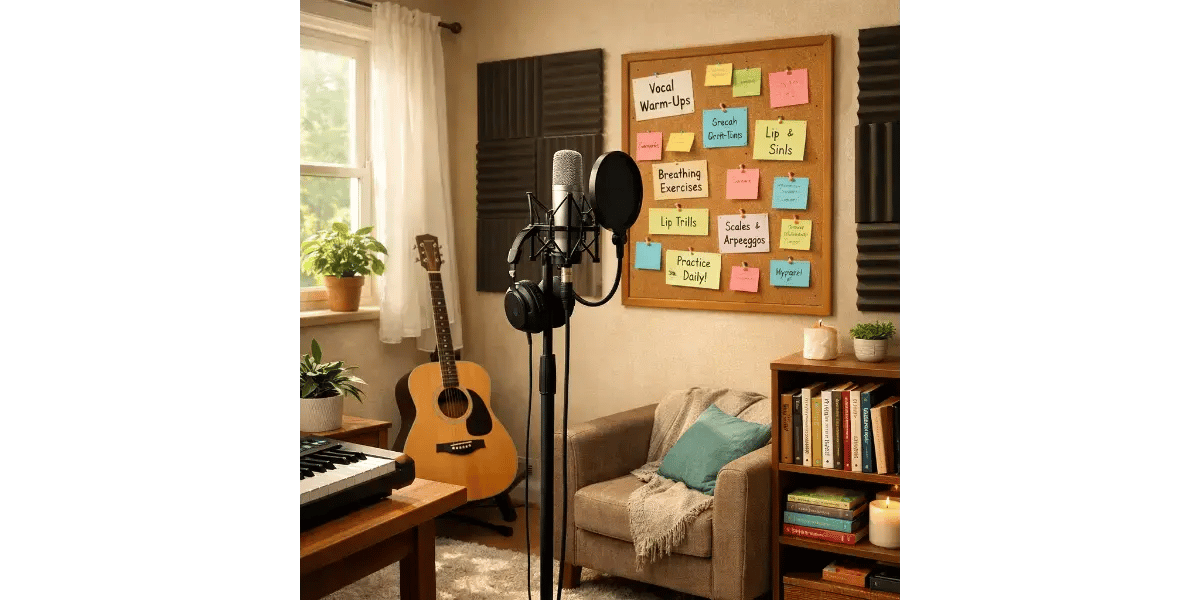
Vocal Therapy Exercises
The greatest instrument in the world isn't a Stradivarius violin or a grand piano sitting in a concert hall. It’s sitting right inside you. Your voice has the potential to be an amazing instrument, resilient, expressive, and powerful. But like any instrument, it requires maintenance, care, and sometimes, a little repair work.
Whether you are a professional singer recovering from a grueling tour, a teacher whose voice feels raw after a week of lectures, or a senior looking to combat age-related vocal changes, vocal therapy exercises can be your best friend. A beautiful voice is not a gift given to only a few. Breathtaking sounds, ideal vocal tones, and strong vocal muscles aren’t always something you are born with. But they are something you can learn to build with practice.
In this guide, we will explore the world of vocal therapy exercises. We’ll break down why they matter, how they work, and provide you with a toolkit of routines tailored for every stage of life.
What Are Vocal Therapy Exercises?
Think of vocal therapy exercises as physical therapy for your voice. Just as a runner might use specific stretches to recover from a knee injury or improve their stride, vocalists and speakers use these exercises to strengthen the laryngeal musculature and coordinate the systems that produce sound.
The voice is a complex system involving three main components:
- The Power Source: Your lungs and breath support.
- The Vibrator: Your vocal folds (cords) inside the larynx.
- The Resonator: Your throat, mouth, and nose that shape the sound.
When these systems aren't working in harmony, perhaps due to overuse, illness, or aging, you might experience hoarseness, strain, or a loss of range. Vocal therapy exercises are designed to restore balance, improve efficiency, and protect your vocal health for the long haul.
Why Do You Need Them?
You don't need a diagnosed voice disorder to benefit from these techniques. While speech-language pathologists (SLPs) use them to treat conditions like vocal nodules or muscle tension dysphonia, they are equally valuable for preventative care.
- For Singers: They smooth out "breaks" in your range and increase stamina.
- For Speakers: They prevent vocal fatigue during long presentations.
- For Everyone: They help maintain a youthful, clear tone as you age.
The Foundation: Vocal Hygiene and Safety
Before diving into the exercises, we need to establish a baseline of safety. Even the best exercises won't help if you are actively damaging your voice elsewhere in your day.
According to the National Institute on Deafness and Other Communication Disorders (NIDCD), healthy habits are the first line of defense. Here are the non-negotiables:
1. Hydration is Key
Your vocal folds need lubrication to vibrate without friction. Drink plenty of water throughout the day. If you consume caffeine or alcohol, which can be drying, balance it out with extra water.
2. Vocal Naps
Just as your body needs sleep, your voice needs rest. If you've been talking or singing for a solid hour, take 10 minutes of complete silence. This "vocal nap" allows the tissues to recover.
3. Avoid Extremes
Screaming at a concert or whispering when you have a sore throat can both be damaging. Whispering actually forces your vocal folds tightly together, causing more strain than normal speaking.
4. Watch Your Environment
Dry air is an enemy to the voice. Using a humidifier, especially in winter or dry climates, can keep your mucus membranes healthy. Aim for about 30% humidity in your home.
Universal Warm-Ups: The "Daily Vitamins" for Your Voice
Regardless of your age or skill level, every vocal workout should start with a warm-up. These low-impact exercises wake up the breath and get the blood flowing to the laryngeal muscles without strain.
For additional warm-up exercises, see 10 Vocal Warm-ups to Change the Way You Sing.
Lip Trills
You may wonder how blowing air through your lips like a horse will help your voice, but lip trills are the gold standard for safe warming up. They reduce pressure on the vocal cords while engaging your breath support.
How to do it:
- Relax your lips completely.
- Blow air through them so they vibrate (like a motorboat sound).
- If this is difficult, gently place a finger on each corner of your mouth and push slightly upward to relieve tension.
- Once the vibration is steady, add a gentle "uh" sound.
- Slide your pitch up and down in a siren motion.
The Siren
This exercise helps you navigate your entire range without breaks. For additional guidance on sliding exercises and vocal range coordination, see Value Of Sliding/Trombone Exercises.
How to do it:
- Start on a comfortable low note using an "ng" sound (as in "sing"). This closes off the back of the mouth and sends the sound into the nasal cavity, which is a safe, resonant place.
- Glide smoothly up to your highest comfortable note, like a fire engine siren.
- Glide back down to the bottom.
- Keep the volume low and the slide smooth.
Vocal Therapy Exercises for Children and Teens
Young voices are resilient, but they are also changing rapidly. For children and teenagers, the focus should be on establishing good habits early and navigating the vocal shifts of puberty without strain.
1. The Straw Technique (Straw Phonation)
This is a favorite among therapists because it is fun and incredibly effective. It falls under the category of Semi-Occluded Vocal Tract (SOVT) exercises. By singing through a straw, you create "back pressure" that helps the vocal folds vibrate more efficiently with less effort.
The Exercise:
- Take a small stirring straw (or a regular straw if that's too difficult).
- Place it in your mouth and hum a tune through it.
- Check for airflow by placing your hand at the end of the straw.
- Why it works: It aligns the vocal cords and reduces collision force, making it a perfect "reset" button for a tired voice.
2. The "Hooty" Gee
Teens often develop tension in the jaw and tongue. This exercise helps lower the larynx (voice box) to a relaxed position.
The Exercise:
- Say the word "Gee" (as in "Geese") but make it sound like a cartoon character, think Yogi Bear or a gentle giant.
- The goal is a "hooty" or hollow sound.
- Slide this sound down a 5-note scale.
- Safety Tip: If you feel your throat tighten, stop. The "G" sound should be gentle, not hard.
Vocal Therapy Exercises for Adults (20s–50s)
Adults often face the "weekend warrior" syndrome, not using their voice much during the week, then pushing it too hard at choir practice or a loud restaurant on the weekend. The goal here is stamina and flexibility.
1. Vocal Function Exercises (The Stemple Protocol)
Dr. Joseph Stemple developed a series of systematic exercises that act like weightlifting for the voice. They are designed to strengthen and coordinate the laryngeal musculature.
The Four Steps:
- Warm-up: Sustain the vowel /i/ (as in "knee") on the note F (above middle C for women, below for men) for as long as possible. The tone should be forward and buzzing, almost nasal.
- Stretching: Glide upward from your lowest to your highest note on the word "knoll." Focus on a forward buzzing sensation on the lips.
- Contracting: Glide downward from your highest to your lowest note on the word "knoll." No growling at the bottom!
- Power: Sustain the notes C-D-E-F-G on the word "old" (without the 'd') for as long as possible.
Recommendation: Ideally, these are done twice in a row, twice a day.
2. Resonant Voice Therapy (The "Mmm-Hmm")
This technique focuses on feeling vibrations in the front of the face (the "mask") rather than in the throat. This is crucial for projecting your voice without strain.
The Exercise:
- Say "Mmm-hmm" like you are agreeing enthusiastically with a friend.
- Focus on the buzzing sensation on your lips and nose.
- Now, extend that into words: "Mmm-many," "Mmm-mine," "Mmm-moon."
- Keep the buzz going through the vowels.
Vocal Therapy Exercises for Seniors (60+)
As we age, our vocal muscles can lose mass and elasticity, a condition known as presbylaryngis. This can lead to a breathy, thin, or shaky voice. The good news? Research shows that vocal training exercises can help aging laryngeal muscles stay strong.
1. The "Push-Pull" Technique
This technique helps improve vocal cord closure (adduction), making the voice sound stronger and less breathy.
The Exercise:
- Sit in a chair and grasp the seat with both hands.
- Pull up on the chair seat while saying a firm "AH."
- Alternatively, push your palms together at chest level while vocalizing.
- Why it works: Engaging the large muscles of the upper body helps the smaller muscles of the larynx close more tightly.
2. Glissandos for Flexibility
To prevent the voice from becoming stiff or monotone, practicing pitch glides is essential.
The Exercise:
- Start on a comfortable middle pitch.
- Slide up as high as you can, then all the way down as low as you can.
- Use a lip trill or a "brrr" sound if a vowel feels too difficult.
- Imagine your voice is a roller coaster, smooth tracks, no bumps.
For more information about sliding exercises and their role in vocal coordination, see Value Of Sliding/Trombone Exercises.
When to Seek Professional Help
While these exercises are powerful, they are not a cure-all for serious medical conditions. Self-awareness is a critical part of being a good singer.
If you answer "yes" to any of the following, it’s time to consult an otolaryngologist (ENT) or a speech-language pathologist (SLP):
- Has your voice been hoarse or raspy for more than two weeks?
- Does your throat often feel raw, achy, or strained after talking?
- Have you suddenly lost the ability to hit high notes?
- Do you find yourself repeatedly clearing your throat?
An ENT can visualize your vocal cords to rule out nodules, polyps, or other structural issues. Once cleared, a voice teacher or therapist can help you build a customized plan.
Integrating Exercises into Your Life
Consistency is better than intensity. You don't need to practice for an hour a day to see results. In fact, shorter, focused sessions are often better for vocal therapy.
Sample Schedule:
- Morning (Shower): Do 2 minutes of gentle humming or lip trills to wake up the voice.
- Mid-Day (Commute/Break): Practice 5 minutes of straw phonation or pitch glides.
- Evening: Perform the Vocal Function Exercises (Stemple Protocol) before dinner.
Learning how to improve your singing voice is not a quick fix solution. It requires patience and attention to detail. However, with personalized vocal exercises tailored to your registration and needs, you can start the journey to hitting those notes perfectly and speaking with confidence.
Unlock Your Voice’s Potential
Your voice is capable of incredible things, but sometimes it needs a little guidance to get there. Whether you are recovering from strain or simply want to take your singing to the next level, having a professional guide makes all the difference.
At VoiceLessons.com, we specialize in connecting you with expert teachers who understand the anatomy of the voice. Our lag-free technology means your lessons happen in real-time, allowing your teacher to correct your technique instantly, just like they would in a physical studio.
Don't let a tired or strained voice hold you back. The tools you need are ready for you.
Join Free Voice Lesson
Ready to build a stronger, healthier voice with guided support? Join Free Voice Lesson and take the next step in your vocal training. The VoiceLessons group demo page currently offers beginner-friendly vocal training, vocal assessment, range/voice-type support, and guided singing practice.
Sources