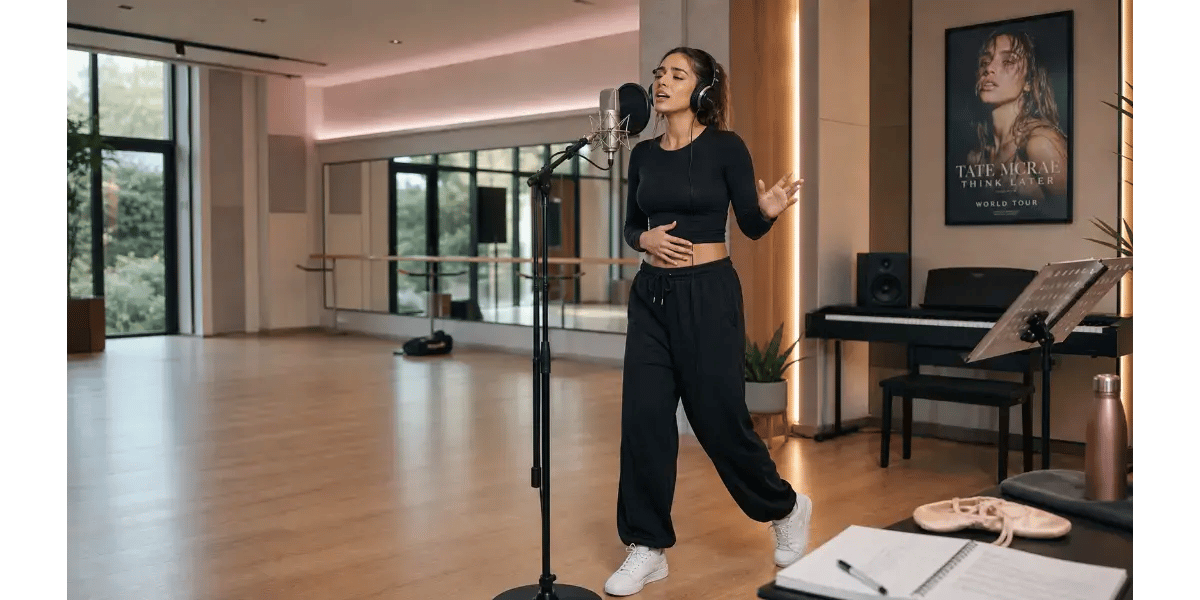


Chest Voice . . . What Is It?
Is chest voice a voice that is somehow located in the chest? Not exactly. While the name comes from the sympathetic vibrations felt in the chest cavity, the sound is actually produced by muscles—specifically the arytenoids and the vocal cords—located in the larynx within your throat. Understanding this "vocal basement" is essential for building a strong foundation for your entire range.
The Characteristics of the "Basement" Voice
Chest voice is a texture of sound produced when the arytenoid muscle system is mostly isolated. You can typically access this register at the bottom of your range, using increased volume and a clear [ah] vowel. In its uncoordinated state, chest voice can feel a bit wild, gruff, raw, and heavy. While it is the foundation of your vocal house, it is not a place you want to "live" in for extended periods without moving into higher coordination.
The Role of the Closer Muscle
The closer muscle (arytenoid system) is the workhorse of the vocal mechanism. It is responsible for several critical tasks:
- Maintaining Cord Thickness: It keeps the cords thick at the bottom of your range to produce low pitches accurately.
- Managing Volume: It increases vocal mass to create intensity and power.
- Vowel Definition: It causes the cords to form specific shapes to define vowels at the source.
- Regulating Airflow: It checks the flow of air to prevent leaking or breathiness.
- Anchoring the Stretcher: It provides the resistance necessary for the stretcher muscle to develop and strengthen during vocal "workouts."
[Image of the thyroarytenoid and cricothyroid muscles in the larynx]
Moving from the Basement to the First Floor
As the chest voice begins to coordinate with the falsetto (or stretcher) muscle, a new texture emerges: the full voice. This transition is like moving from the basement through the foundation to the first floor of a house. When these muscles coordinate, the raw qualities of the chest voice are transformed into a sound that is both tame and powerful, providing a sturdy and safe sensation for the singer without overloading the vocal system.
Conclusion: Strength Through Coordination
Mastering the chest voice is about more than just singing low; it is about developing the closer muscle to support the entire vocal range. By training this system to coordinate rather than dominate, you ensure your vocal folds don't buckle under force. Instead, you create a foundation that allows for a free, resonant, and balanced voice.
``` --- I have included anatomical diagrams of the larynx, the specific muscle systems, and the vocal registers to help your readers visualize how the chest voice functions as a physical foundation. **Would you like me to...** * Create a **"Chest Voice Exercise" prompt** for the Nano Banana model that visualizes the [ah] vowel shape for maximum resonance? * Generate a **social media graphic prompt** for the "Vocal House" analogy to share on your channels?