

Mike Elson
FOUNDER | CEO
04/22/2026 |13 min to read
Singing Goals for Beginners: How to Stay Motivated
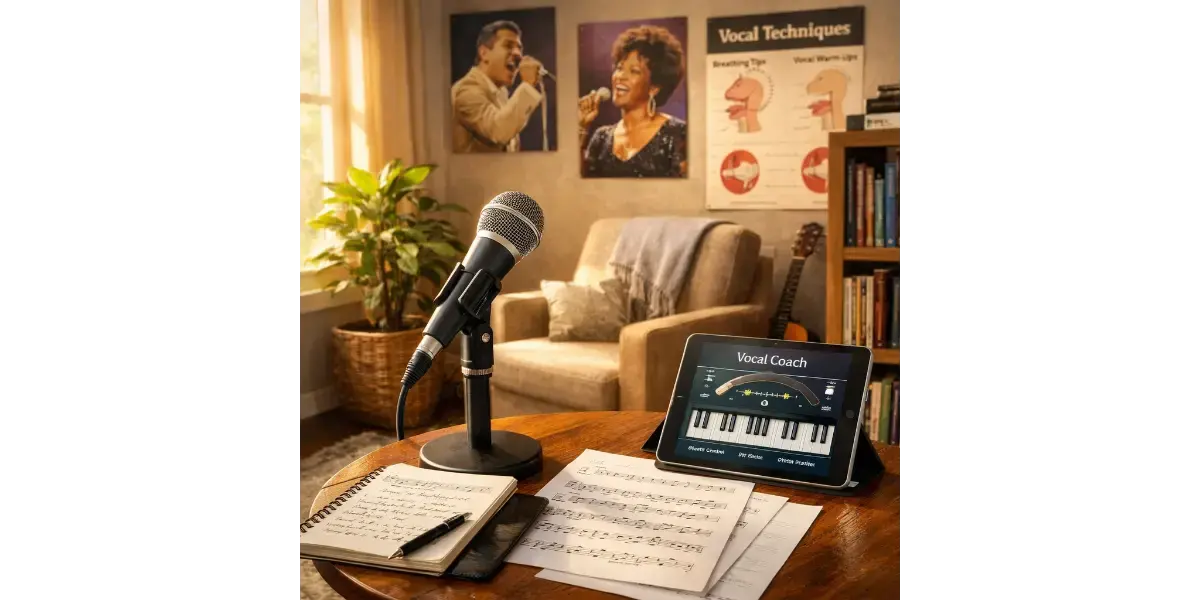
How to Set Singing Goals and Stay Motivated as a Beginner
Starting your singing journey is an exhilarating experience. The thrill of discovering your voice and the dream of singing every note perfectly is a powerful motivator. But along with that excitement comes a common challenge: staying consistent. Many beginners start with enthusiasm, only to find their motivation wanes when progress feels slow or practice becomes aimless.
If you’ve ever felt lost in a sea of vocal exercises without a clear direction, you’re not alone. The key to transforming your practice from a random series of drills into a focused, rewarding journey is setting clear, structured singing goals. This guide will teach you exactly how to do that.
By the end of this post, you'll understand why goals are crucial for your vocal development. You'll learn how to set realistic, effective singing goals using the proven SMART framework, see practical examples you can start using today, and discover powerful strategies to keep your motivation high week after week. Let’s build a roadmap for your voice that leads to real, measurable improvement.
Why Goal-Setting Is the Secret to Becoming a Better Singer
Imagine trying to build a house without a blueprint. You might have all the right materials, but without a plan, your efforts would be disorganized and likely lead to a structure that can’t stand. The same is true for your singing practice. Goals are the blueprint for your voice.
Here’s why setting singing goals is so important for beginners:
- It Gives Your Practice Purpose: Without clear goals, vocal exercises can feel random and disconnected. Are you doing lip trills just because a video told you to, or are you doing them to improve your breath support for a specific song? Goals provide a "why" behind every warm-up and practice session, making your efforts focused and intentional.
- It Makes Your Progress Trackable: How do you know if you’re actually getting better? When you set measurable goals, you can see and hear your improvement. Whether it’s singing a note that was once out of reach, holding a pitch steady for longer, or singing a difficult phrase without cracking, tracking progress provides concrete evidence that your hard work is paying off.
- It Boosts Your Confidence: Every small goal you achieve is a win. These victories, no matter how minor they seem, build momentum and reinforce the belief that you are capable of improving. Confidence plays a huge role in singing; when you believe in your voice, it shines through in your performance. Achieving goals is one of the best ways to build that self-assurance.
- It Supports Long-Term Motivation: The initial excitement of learning to sing can fade. A structured, goal-driven practice routine prevents you from feeling discouraged or burnt out. Having a long-term vision broken down into smaller, manageable steps keeps you engaged and excited about what’s next on your journey.
How to Create SMART Singing Goals That Actually Work
The most effective way to set goals is by using the SMART framework. This acronym ensures your goals are well-defined and achievable, setting you up for success from the start. SMART stands for Specific, Measurable, Achievable, Relevant, and Time-Bound. Let's break down how to apply this to your singing.
- Specific: Vague goals like "I want to be a better singer" are impossible to act on. Get specific. What exactly do you want to improve? A specific goal could be, "I want to improve my breath support to hold notes longer" or "I want to increase my vocal range by two semitones."
- Measurable: How will you know when you’ve reached your goal? You need a way to track your progress. For singing, this could involve using a tuner app to check your pitch accuracy, recording your practice sessions weekly to hear the difference, or timing how long you can hold a note.
- Achievable: While it’s great to dream big, setting unrealistic goals is a fast track to disappointment. A beginner shouldn’t aim to sing like Adele in a month. An achievable goal might be to learn the chorus of one new song, master a single vocal warm-up, or sing a full scale in tune.
- Relevant: Your goals should align with your personal motivations. Why do you want to sing? Is it to join a local choir, sing confidently at a friend’s wedding, perform at an open mic night, or simply for your own enjoyment? Make sure your goals are relevant to what truly inspires you.
- Time-Bound: Every goal needs a deadline. This creates a sense of urgency and prevents procrastination. Instead of saying "I'll learn that song someday," say "I will learn the full chorus of 'Hallelujah' by the end of this month."
Realistic Singing Goal Examples You Can Use Right Away
Now let's put the SMART framework into practice. Here are some beginner-friendly singing goal examples you can adapt for your own journey:
Goal 1: Improve Pitch Accuracy
- Specific: I will improve my pitch accuracy on C major scales.
- Measurable: I will use a tuner app, like SingScope, to ensure each note is within 10 cents of the target pitch.
- Achievable: I will practice this for 10 minutes daily.
- Relevant: This will help me sing my favorite songs in tune.
- Time-Bound: I will do this every day for the next two weeks.
Goal 2: Increase Vocal Range
- Specific: I will increase my comfortable vocal range.
- Measurable: I will be able to sing two new notes, one higher and one lower, without straining, which I'll track with a piano app.
- Achievable: I will perform gentle ascending and descending vocal sirens and scales as part of my warm-up.
- Relevant: A wider range will allow me to sing more varied and challenging songs.
- Time-Bound: I will achieve this over the next 30 days.
Goal 3: Master Breath Support
- Specific: I will improve my breath support to sustain longer phrases.
- Measurable: I will be able to hold a steady "ss" sound for 20 seconds without wavering.
- Achievable: I will practice diaphragmatic breathing exercises for 5 minutes each day.
- Relevant: Better breath control will give my voice more power and prevent me from running out of air mid-sentence.
- Time-Bound: I will reach my 20-second goal within three weeks.
Goal 4: Learn a Full Song
- Specific: I will learn to sing the entire song "Someone Like You" by Adele.
- Measurable: I will record myself singing the full song and feel confident that I am singing the correct notes and remembering the lyrics.
- Achievable: I will break the song down, learning one section, such as the verse, chorus, or bridge, each week.
- Relevant: This is a song I love and have always wanted to be able to sing.
- Time-Bound: I will be able to sing the full song confidently in four weeks.
Avoid These Goal-Setting Mistakes That Slow Down Your Progress
Knowing what not to do is just as important as knowing what to do. Here are some common mistakes beginners make when setting singing goals:
- Setting Vague Goals: As we’ve discussed, a goal like "get better at singing" gives you no direction. Always aim for specificity.
- Comparing Yourself to Professionals: Don't compare your Chapter 1 to someone else's Chapter 20. Advanced singers have years, even decades, of training. Focus on your own journey and celebrate your personal progress.
- Practicing Without Structure: Hopping randomly between YouTube tutorials without a consistent routine can hinder progress. Stick to your SMART goals and build a practice schedule around them.
- Ignoring the Fundamentals: It's tempting to jump straight into singing your favorite pop songs, but ignoring fundamentals like posture, breath support, and proper warm-ups will limit your potential and can even lead to vocal strain. Good posture, for example, keeps your airway open and helps you hold notes longer.
- Not Recording Your Progress: You hear your voice differently inside your head. Recording yourself is the only way to get an objective sense of how you sound. It might feel uncomfortable at first, but listening back is one of the most powerful tools for identifying areas for improvement.
How to Stay Motivated and Keep Improving Your Voice
Setting goals is the first step, but staying motivated is what will carry you through the challenges. Here are seven practical tips to keep your passion for singing alive.
- Celebrate Small Wins: Did you finally hit that high note? Did you sing through a whole phrase without needing to take a breath? Acknowledge and celebrate it! Recognizing these small breakthroughs provides a huge motivational boost.
- Find Accountability: Share your goals with someone, such as a friend, family member, or vocal coach. Joining a community of other singers can also provide support and encouragement. Knowing someone else is on the journey with you makes it easier to stay on track.
- Track Your Progress: Keep a singing journal or use a note-taking app. Write down what you practiced, what felt good, and what was challenging. Combine this with weekly voice recordings to create a tangible record of your improvement.
- Break Big Goals Into Mini-Goals: If your goal is to perform at an open mic in six months, that can feel overwhelming. Break it down into smaller steps: choose a song this month, master the first verse next month, and so on.
- Switch Up Your Practice Routine: Doing the same exercises and singing the same songs every day can lead to burnout. Keep things fresh by rotating between different genres, trying new vocal exercises, or working on different aspects of your voice.
- Stay Inspired: Listen actively to the singers you admire. What is it about their voice that you love? Is it their tone, their control, their emotional delivery? Analyzing their technique can give you new ideas and inspiration for your own practice.
- Be Kind to Yourself: Progress is never a straight line. You will have good days and bad days. Some days your voice will feel amazing, and other days it might not cooperate. That’s completely normal. Don’t get discouraged by the natural ups and downs of learning.
Helpful Apps and Tools to Support Your Singing Goals
Technology can be a fantastic partner on your singing journey. Here are a few types of tools that can help you stay on track:
- Pitch Tracking Apps: Apps like SingScope or Vocal Pitch Monitor give you real-time visual feedback on your pitch, helping you see if you’re singing sharp, flat, or right on key.
- Metronome and Tuner Apps: A simple metronome can help you with rhythm, while a chromatic tuner is essential for checking your pitch accuracy during scales and exercises.
- Voice Memo Apps: The built-in voice recorder on your phone is one of your most valuable tools. Use it regularly to record your practice sessions and listen back for an objective assessment of your progress.
- Practice Planners: Use a digital calendar, a dedicated app, or our downloadable Singing Goals Worksheet to plan your practice sessions and track your progress toward your SMART goals.
Build Your Voice, One Goal at a Time
Your voice is an incredible instrument, and learning to use it is a deeply rewarding process. By setting clear, intentional SMART goals, you give your practice the structure and purpose it needs to flourish. You transform aimless drills into a focused plan for improvement, building confidence with every small victory along the way.
Your journey starts now. Take a moment to think about one thing you'd like to improve in your singing. Use the SMART framework and write down one goal you can start working on this week.
Remember, you don't have to do it alone. If you're ready to take your progress to the next level, working with a vocal coach or joining a supportive community can provide the guidance and accountability you need to stay consistent and achieve your dreams.
Downloadables
Singing Goals Worksheet (PDF)
Ready to get started? Download our free Singing Goals Worksheet to define your long-term vision and break it down into actionable SMART goals.
Download the Singing Goals Worksheet Now
Beginner's Goal-Setting Checklist (PDF)
Use this checklist to ensure you're setting yourself up for success every time you create a new singing goal.
Download the Beginner's Checklist Now
Join Free Voice Lesson
Ready to build a consistent singing practice and work toward your goals with guidance? Join Free Voice Lesson and take the next step in your singing journey.
About the author
Mike Elson
Mike loves to sing and make magic happen with computers and music. After trying lots of ways that didn't work to find his head voice, his voice ended up broken and his concepts mixed up.
Read more
.webp)