One of the most common questions people ask is, "Am I just born with a good voice, or can I actually learn to sing?"
The short answer is yes. Most people can learn to sing and improve their voice with proper training and consistent practice.
While some people may begin with a natural ear for music or stronger vocal coordination, singing is largely a skill involving breath control, pitch accuracy, vocal coordination, and regular practice. Like playing an instrument or learning a new language, your singing voice can be developed over time.
If you're completely new to singing, start with our beginner guide to learning how to sing.
Understanding the "Natural" vs. "Trained" Voice
What we often perceive as "natural talent" can come from a combination of musical exposure, listening skills, coordination, and experience.
Someone who grew up singing in choirs, listening closely to music, or playing an instrument may appear naturally talented because they developed important musical skills early.
However, even naturally gifted singers benefit from training. Vocal technique can help singers improve control, expand their capabilities, and use their voices more efficiently.
For beginners, the important thing to understand is that your current singing ability does not necessarily determine what your voice can become.
With consistent practice, you can develop better coordination, control, flexibility, and confidence.
The Three Pillars of Learning to Sing
1. Ear Training
Singing in tune requires your ears, brain, and voice to work together.
One of the first skills beginners develop is pitch matching, which means hearing a note and reproducing that note accurately with the voice.
You can practice pitch matching by:
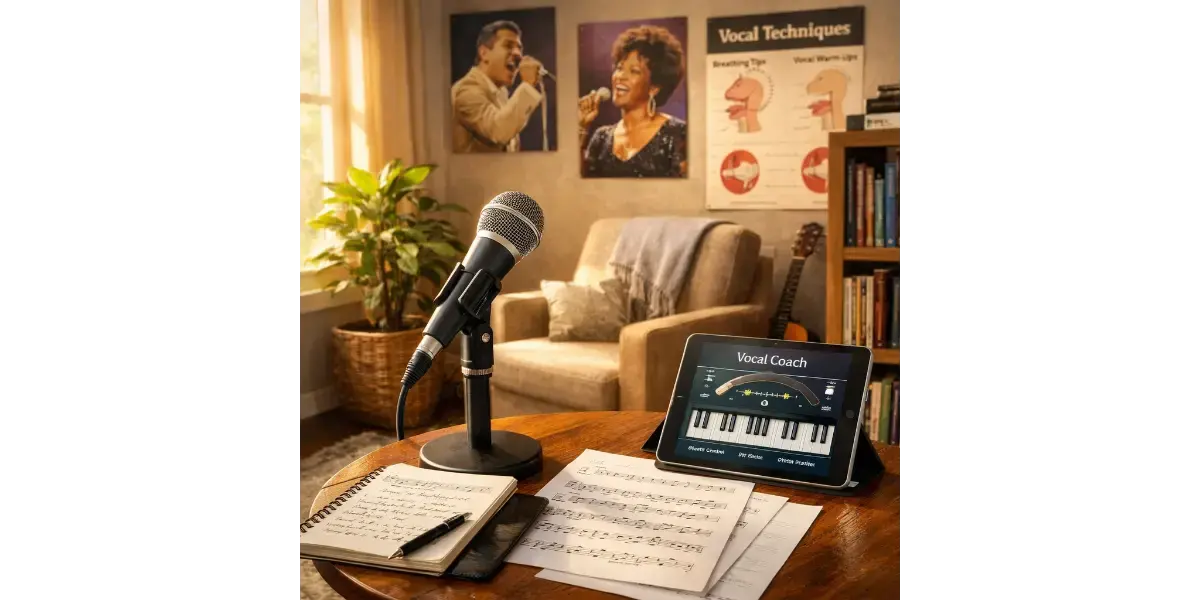
- Playing one comfortable note on a piano or pitch app
- Listening carefully before singing
- Humming the note back
- Checking whether your pitch matches
- Repeating the exercise with different notes
If pitch accuracy is difficult at first, don't assume you cannot sing. Pitch matching is a skill that can improve through focused practice.
For more help, read our guide on how to sing on pitch and improve your ear training.
2. Breath Support
Proper singing requires more controlled breathing than ordinary speaking.
Instead of relying on shallow breaths and pushing from the throat, singers learn to coordinate breathing with the phrases they sing.
Good breath support can help you:
- Sustain notes for longer
- Maintain a steadier tone
- Improve vocal control
- Sing longer phrases comfortably
- Reduce unnecessary tension
A simple exercise is to inhale comfortably while allowing expansion around your abdomen and lower ribs. Then release the air gradually on a steady "sss" sound.
If breath control is one of your challenges, practice these breathing exercises for singing.
3. Technique and Resonance
Learning to sing is not about forcing your voice to sound bigger or trying to imitate another singer.
Healthy vocal technique involves coordinating your breath, vocal folds, and vocal tract so that sound can be produced efficiently.
As your technique develops, you can work on:
- Vocal resonance
- Tone quality
- Vocal range
- Register transitions
- Articulation
- Dynamics
- Vocal flexibility
Regular exercises can help strengthen these skills without relying on unnecessary throat tension.
Try incorporating daily vocal warm-ups before working on songs.
What About People Who Think They Are Tone Deaf?
Many beginners describe themselves as "tone deaf" because they struggle to match notes.
But having difficulty singing in tune does not automatically mean you are unable to recognize pitch.
For many learners, the problem is simply that the connection between hearing a pitch and reproducing it with the voice has not been sufficiently developed.
Start slowly.
Play one note, listen carefully, and try to match it. Record yourself and compare the two sounds. As your ear and voice become better coordinated, pitch matching can become more accurate.
How Long Does It Take to Learn to Sing?
There is no single timeline that applies to every singer.
Progress depends on factors such as:
- Your starting skill level
- How consistently you practice
- Your specific vocal goals
- The quality of your practice
- Your ability to recognize and correct mistakes
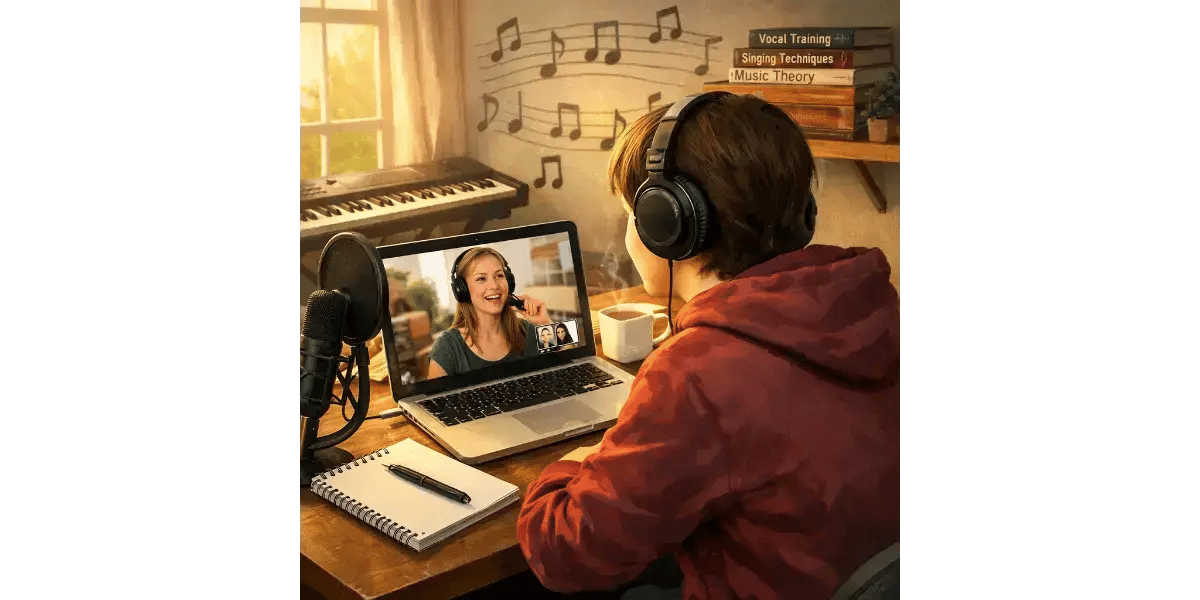
- Whether you receive personalized feedback
Instead of asking, "How long until I'm a good singer?" focus on smaller, measurable goals.
For example:
- Match five comfortable pitches accurately.
- Sustain a steady note without unnecessary tension.
- Complete a simple vocal warm-up consistently.
- Sing one verse of a song comfortably and in tune.
- Record yourself regularly and compare your progress.
Setting smaller goals makes your improvement easier to recognize and can help you stay motivated.
Practice Matters More Than Perfection
One of the biggest mistakes beginners make is comparing themselves with experienced singers.
Professional singers may have spent years developing their voices. Comparing your first few weeks of training with someone else's years of experience can make normal beginner challenges feel like failure.
Instead, compare your voice with your previous recordings.
A short, structured practice routine can include:
- Breathing exercises: 3–5 minutes
- Gentle vocal warm-ups: 5 minutes
- Pitch and scale exercises: 5–10 minutes
- Song practice: 10–15 minutes
Consistency is more useful than occasionally practicing for hours.
You can also follow our guide on how to build a consistent singing routine.
Your Voice Is Unique
So, can anyone learn to sing?
For most people, singing ability is not fixed at birth. Skills such as pitch matching, breath coordination, resonance, vocal control, and musical expression can be developed through training and practice.
You may not end up sounding exactly like your favorite singer—and that shouldn't be the goal.
Your goal is to discover what your own voice can do.
With patient practice, healthy technique, and appropriate guidance, you can develop a voice that feels more controlled, accurate, expressive, and confident.
Don't let the idea that singers are simply "born talented" prevent you from learning.
Join Free Voice Lesson
Want personalized guidance as you develop your singing voice?
Join Free Voice Lesson and start building your technique, confidence, and vocal skills with structured support.



.webp)