Mike Elson
FOUNDER | CEO
04/22/2026 |13 min to read
Unlock the Secrets of The Voice: How to Sing Like Frank Sinatra

Unlock the Secrets of "The Voice": How to Sing Like Frank Sinatra
There is a reason why, decades later, we still call him "The Voice." When you listen to Frank Sinatra, it sounds effortless. It feels like he’s standing right next to you, holding a conversation that just happens to be set to a melody. His singing is smooth, sophisticated, and incredibly intimate.
For many aspiring singers, listening to Sinatra can feel both inspiring and intimidating. You might catch yourself thinking, "I wasn't born with that kind of talent." But here is the empowering truth: A beautiful voice is not a gift given to only a few. While Sinatra certainly had natural charisma, his signature sound wasn't magic—it was a result of specific, learnable techniques.
The art of learning how to sing and how to improve your individual singing voice is learning how to work with the tools you already have in your toolbox. Sinatra was a master mechanic of his own instrument. He studied, he practiced, and he borrowed techniques from other instruments to create a style that changed pop music forever.
In this guide, we are going to break down the specific mechanics behind his sound. We will look at Sinatra vocal techniques ranging from his legendary breath control to his laid-back phrasing. Whether you are a shower singer or preparing for an audition, these tips will help you add that touch of "Ol' Blue Eyes" smoothness to your own performance.
The Foundation: Mastering Breath Control
If you want to learn how to sing like Frank Sinatra, you have to start with the air. Sinatra’s ability to hold a note and sing long, unbroken phrases was legendary. He didn't gasp for air in the middle of a sentence. Instead, he sang through lines seamlessly, creating a "legato" (smooth and connected) sound that captivated listeners.
The Tommy Dorsey Influence
Sinatra didn't learn his breathing technique from another singer. He learned it from a trombone player.
Early in his career, Sinatra sang with the Tommy Dorsey band. He was fascinated by how Dorsey could play long, winding musical phrases on his trombone without seemingly taking a breath. Sinatra would literally sit behind Dorsey on the bandstand, watching the back of his jacket to see when he inhaled. He noticed that Dorsey wouldn't heave his chest or lift his shoulders.
Sinatra realized that to sing with that same smooth, instrumental quality, he had to master his breath in the same way. He wanted to "play" his voice like a violin or a trombone.
The "Sneak" Breath
One of the secrets Sinatra adopted was the "sneak" breath or the "pinhole" technique. Instead of taking a large, audible gasp that interrupts the flow of the song, he learned to take quick, silent sips of air through the corner of his mouth.
This allowed him to maintain the momentum of the song. When you listen to his records, you rarely hear him breathe. This creates an illusion of endless sound. It keeps the listener suspended in the moment because the spell isn't broken by the physical effort of singing.
Building Your Lung Capacity
Sinatra took his physical conditioning seriously. He knew that to support those long notes, he needed stamina. He used to swim underwater laps in a pool, pushing himself to go further and further on a single breath.
You don't need an Olympic-sized swimming pool to build this kind of control, but you do need to understand that your voice is a wind instrument. It requires a steady, consistent stream of air pressure—not force, but support.
Exercise: The "Pinhole" Sip
You can try a variation of the technique Sinatra observed.
- Stand in front of a mirror with a relaxed posture.
- Exhale all your air.
- Instead of opening your mouth wide to inhale, form a tiny "pinhole" shape with your lips, as if you are sipping through a very small straw.
- Inhale slowly and silently through that small opening. Notice how your stomach and ribs expand, but your shoulders stay down.
- Sing a long, steady "Ah" note.
- When you need more air, use that quick "sip" action again.
Goal: Make the intake of breath as silent and invisible as possible.
Signature Phrasing: The Art of "Rubato"
Once you have the breath to sustain the notes, the next step is mastering how you deliver them. This is called phrasing. If you were to sing a song exactly as it is written on the sheet music, hitting every beat precisely on the nose, it might sound technically correct—but it wouldn't sound like Sinatra.
Singing "Behind the Beat"
Sinatra’s most famous stylistic trait was his ability to sing "behind the beat." This technique, often called rubato (which means "robbed time"), creates a sense of relaxation and coolness.
Imagine the band is a train moving steadily down the tracks. Most singers run right alongside the train. Sinatra, however, would let the train get a little ahead of him. He would delay his entry into a phrase just slightly, or stretch a word out so it lagged behind the rhythm section.
This creates a conversational quality. It makes it sound like he is making up the lyrics on the spot, rather than reciting them. It pulls the listener in because it feels spontaneous. However, he always caught up. He knew exactly where the "one" count was, and he always resolved the phrase on time. It’s a delicate dance between tension and release.
Legato: Connecting the Dots
Sinatra hated "choppy" singing. He believed that a line of lyrics should flow like a stream of oil. This concept is known as legato.
Many singers chop up a sentence based on the rhythm: Fly. Me. To. The. Moon.
Sinatra would sing it as one continuous thought: Flymetothemoon.
He connected the end of one word to the beginning of the next. Consonants (like T, P, K) were crisp, but he didn't let them stop the sound. The vowels carried the energy. To emulate this, imagine your voice is a cello bow that never leaves the strings.
Exercise: The Spoken Phrase
To get the feel of Sinatra’s phrasing, try speaking the lyrics first.
- Take a line like, "I've got the world on a string."
- Say it out loud as if you are telling a secret to a friend. You wouldn't say it robotically. You would speed up through "I've got the" and slow down on "world."
- Now, try to sing it with that same natural rhythm, letting the melody follow your speaking voice.
- Don't worry about the metronome for a moment. Just focus on the natural flow of the words.
The Storyteller: Lyrics and Diction
Sinatra often said that the audience needs to believe you. He wasn't just singing notes; he was telling a story.
"The Mic is Your Friend"
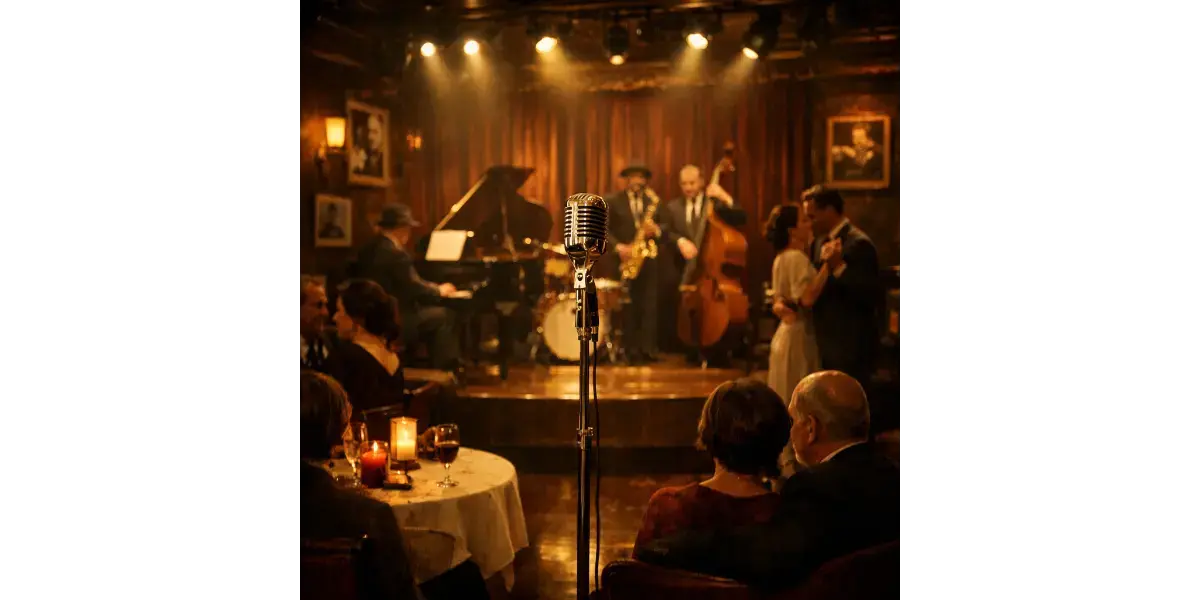
Before the era of crooners like Sinatra and Bing Crosby, singers had to belt out tunes to be heard at the back of the hall. This often meant sacrificing nuance for volume.
Sinatra embraced the microphone. He viewed it as an instrument in itself. He understood that the microphone allowed him to sing softly, to whisper, and to use subtle dynamics that would otherwise be lost. He treated the mic like a person’s ear.
He utilized a technique called "shading." He would lean in close for intimate, breathy low notes, and pull back slightly for louder, more powerful high notes. This created a dynamic range that took the listener on an emotional journey.
Respecting the Words
Sinatra received advice from Bing Crosby early on: "Focus on the words." Sinatra took this to heart. His diction was impeccable. You never had to guess what he was singing.
However, he didn't over-pronounce to the point of sounding stiff. He had a specific way of shaping his vowels that was open and resonant. He tailored his accent to sound sophisticated yet approachable—a blend of his Hoboken roots and a polished, mid-Atlantic clarity.
When you practice Sinatra vocal techniques, pay attention to the story. If the song is sad, color your tone with a darker, breathier sound. If it's a swinging, happy number, brighten your vowels and add a little "ping" to your tone.
Common Mistakes to Avoid
Learning how to sing like Frank Sinatra is about capturing his essence, not just doing an impersonation. Here are a few pitfalls to avoid on your journey.
The "Caricature" Trap
It is very easy to fall into the trap of doing a "Rat Pack" impression. This usually involves scooping into notes excessively, snapping your fingers too much, or putting on a fake "tough guy" accent. Sinatra’s style was subtle. If you exaggerate the quirks, you lose the class. Focus on the musicality first, and let the style come second.
Pushing Too Hard
Sinatra’s power came from resonance and breath support, not from throat tension. A common mistake for beginners is trying to force that big, booming sound by tightening the neck and jaw.
Your voice has the potential to be an amazing instrument without force. If you feel strain or tickling in your throat, you are pushing too hard. Sinatra’s sound was relaxed. If you can't sing the note quietly, you don't have control over it yet.
Ignoring the Band
While Sinatra sang behind the beat, he was never off beat. He listened to the band intensely. You cannot have that cool, laid-back phrasing if you don't know exactly where the rhythm is. You have to know the rules before you can break them.
Actionable Steps to Improve Your Crooning
Ready to start practicing? Here is a simple routine to help you integrate these techniques into your singing.
1. The Hiss Exercise (Breath)
- Take a deep, silent breath (using the pinhole technique).
- Exhale on a hiss (like a snake: "sssss").
- Keep the hiss steady and consistent. Don't let it wobble.
- Time yourself. Can you go for 15 seconds? 20? 30?
- Why this helps: It trains your body to regulate the airflow, just like Sinatra did for those long phrases.
2. The "Monotone" Read (Diction)
- Pick a Sinatra standard (e.g., "My Way" or "Fly Me to the Moon").
- Read the lyrics out loud in a monotone voice, focusing purely on crisp consonants and open vowels.
- Exaggerate the lip movements.
- Why this helps: It builds muscle memory for clear diction so that when you add the melody, the words remain clear.
3. The "Back-Phrasing" Challenge
- Put on a karaoke track of a song you know well.
- Try to sing the verse just a fraction of a second later than you normally would.
- Listen to how it changes the feel of the song. Does it sound more relaxed?
- Why this helps: It helps you break out of the habit of singing robotically on the beat.
Your Voice, Your Style
Frank Sinatra was one of a kind. But the techniques he mastered—breath control, legato phrasing, and emotional storytelling—are universal tools that belong to every singer.
Remember, learning how to sing like Frank Sinatra isn't about becoming a clone. It's about using these techniques to find more freedom, control, and expression in your own voice. It’s about learning to work with the tools you already have in your toolbox to create something timeless.
Whether you want to be the star of your local karaoke night or you are looking to take your professional skills to the next level, the journey starts with a single note.
Ready to Find Your Voice?
Reading about technique is a great start, but nothing beats real feedback from a professional coach. If you are ready to unlock your vocal potential and learn flexible techniques that fit your busy schedule, we are here to help.
Sign up for a free trial singing lesson today and start your journey toward vocal confidence.
About the author
Mike Elson
Mike loves to sing and make magic happen with computers and music. After trying lots of ways that didn't work to find his head voice, his voice ended up broken and his concepts mixed up.
Read more