Have you ever dreamed of singing confidently but weren’t sure where to start? Maybe you've always hummed along to the radio in the car, or perhaps you belt out ballads in the shower when no one is home. That little spark of desire, the wish to understand your own voice, is the first step on an incredible journey.
But let's be honest: the idea of your very first singing lesson can be terrifying. It is completely normal to feel a mix of excitement, nervousness, and even a little fear. "What if I sound terrible?" "What if I can't “hit” the notes?" These questions swirl through the minds of almost every beginner.
The good news? Every professional singer you admire was once a beginner standing in a room (or logging on to a call) for their first lesson. Your voice has the potential to be an amazing instrument. You don’t need to pack it in a bag, load it in a van, or worry about it falling offstage. The greatest instrument in the world is sitting right inside you, waiting to be discovered.
Knowing exactly what to expect can transform that anxiety into excitement. This guide will walk you through everything you need to know about your first singing lesson, from what to wear to the specific exercises you'll likely encounter. By the end, you'll be ready to walk through that door (or click that link) with confidence.
Preparing for Your First Singing Lesson
Success in your first lesson starts before you even meet your coach. A little bit of preparation goes a long way in calming your nerves and ensuring you get the most out of your time.
What to Bring
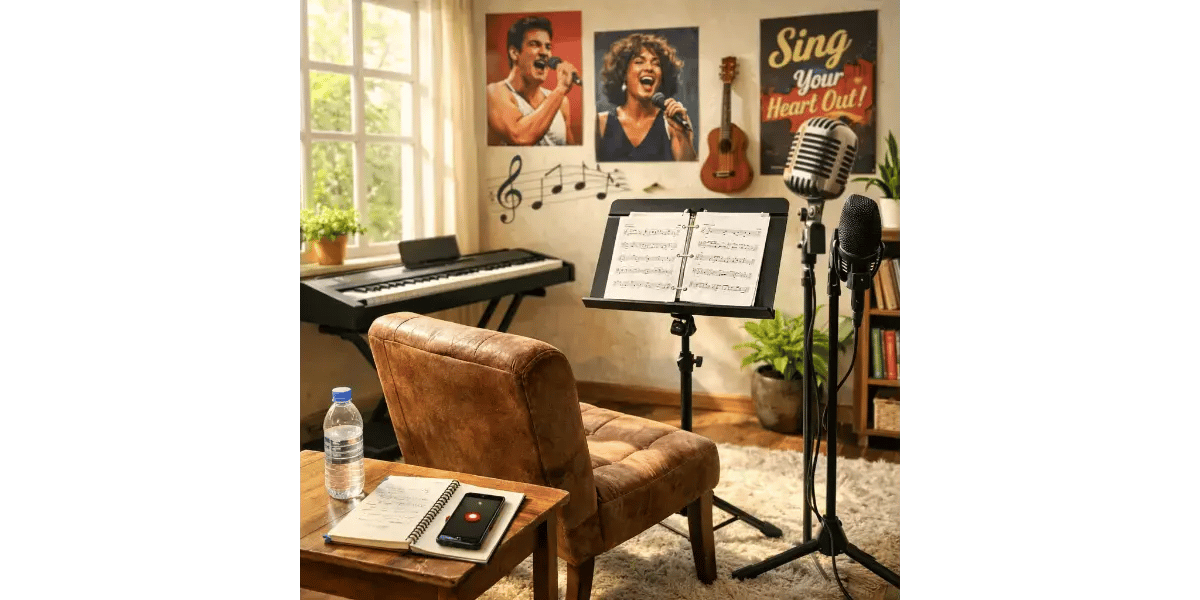
You don’t need a lot of equipment to start singing, but coming prepared shows your coach you are serious and ready to learn. Here is a checklist of essentials:
- Water Bottle: Staying hydrated is non-negotiable for singers. Your vocal cords need moisture to vibrate freely without friction. Room-temperature water is best, as ice-cold water can sometimes constrict the throat muscles.
- Notebook and Pen: You are going to learn a lot of new terminology and techniques. Having a dedicated notebook for your lessons allows you to jot down exercises, breathing tips, and homework assignments.
- Recording Device: Most smartphones have excellent voice memo apps. Recording your lesson allows you to practice accurately at home. Always ask your coach for permission before recording.
- Music Materials: If your coach has asked you to prepare a song, bring the sheet music, lyrics, or a backing track.
What to Wear
Singing is a full-body activity. Your instrument isn't just your throat; it's your lungs, your diaphragm, your posture, and your core. Therefore, what you wear matters more than you might think.
You want clothing that allows for deep breathing and proper posture. Avoid restrictive outfits that might interfere with movement or constrict your abdomen. High heels or stiff dress shoes can also throw off your alignment, so opt for flat, comfortable footwear.
Recommended attire:
- Yoga pants or loose-fitting trousers
- T-shirts or comfortable blouses
- Sneakers or flat shoes
Cultivating the Right Mindset
Confidence plays a significant role when learning how to improve your singing voice. If you don’t believe in your voice while singing, your lack of confidence will creep through. However, confidence doesn't mean you have to be perfect, it means you have to be willing to try.
Approach your first lesson with an open mind. Be willing to make weird sounds, look a little silly, and make mistakes. In fact, making mistakes is the fastest way to learn. Your coach is there to guide you, not judge you. Remember, even the most accomplished vocalists started with cracked notes and shaky pitch.
What Happens During the First Session
So, you've arrived, you're hydrated, and you're ready. What actually happens now? While every teacher has a unique style, most first sessions follow a similar structure designed to assess your current ability and set a baseline for growth.
Introduction and Goal Setting
The first few minutes are usually spent getting to know each other. Your vocal coach will want to know why you are there. Are you looking to join a choir? Do you want to sing professionally? Or do you just want to sound better at karaoke?
Be honest about your goals. If your goal is to sing high notes clearly, your coach will design exercises to improve your upper range. If you want to sing jazz, they will focus on different techniques than if you wanted to sing opera. This conversation ensures that your lessons are tailored to you.
Warm-Up Exercises
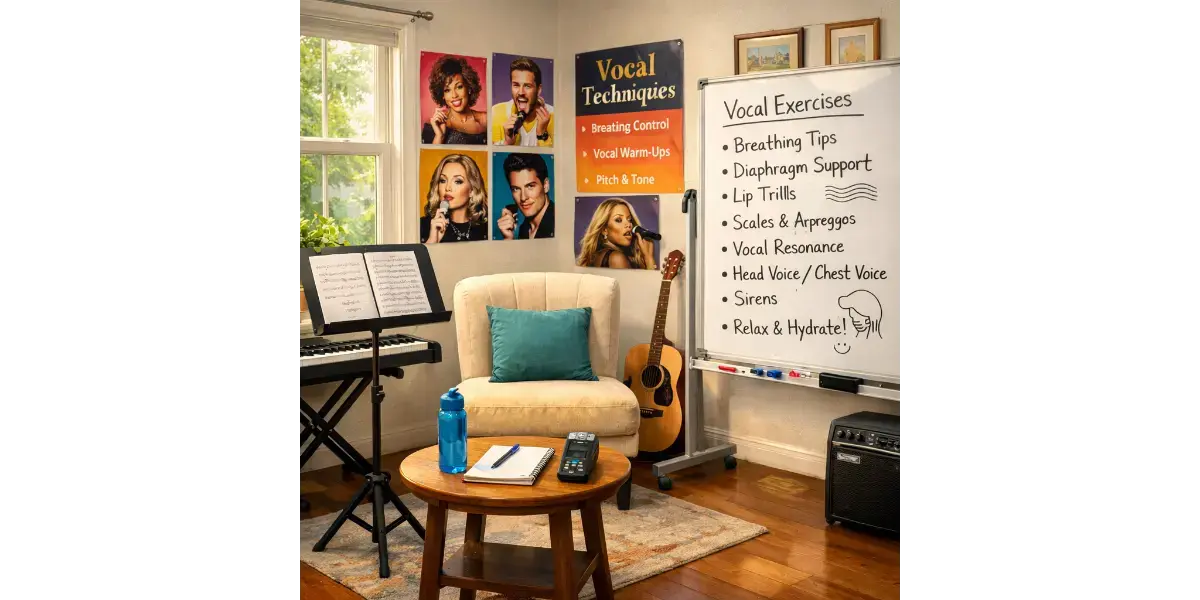
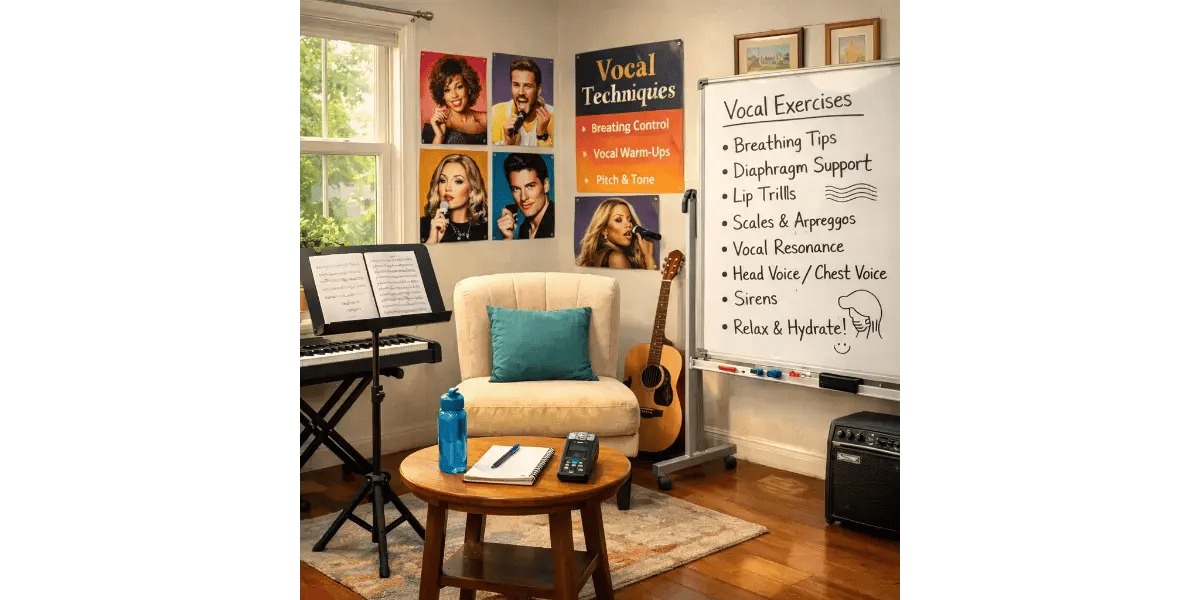
Just as a runner stretches before a sprint, a singer must warm up their vocal cords. You will likely spend 10 to 15 minutes on vocal warm-ups for beginners. These might feel silly at first, but they are essential for vocal health.
Common warm-ups include:
- Lip Trills: Blowing air through your lips to make them vibrate (like a horse noise). This helps to hear and feel how steady the air is moving.
- Humming Scales: Gently humming up and down your range to wake up the resonance in your face and head.
- Breathing Exercises: Learning to steady your airflow is crucial. You might practice inhaling for 4 counts and exhaling on a hiss for 4 counts.
Voice Assessment
Once you are warmed up, your coach will likely run through a few scales or ask you to sing a verse of a song to assess your voice.
What the coach evaluates:
- Vocal Range: The distance between your lowest and highest comfortable notes.
- Tone and Pitch: Can you stay in tune? Is your tone breathy, nasal, or clear?
- Technique: Are you straining your neck? Is your jaw tight?
Example: This is not a test, it’s a way for your coach to understand your voice and guide your progress. Think of it as a diagnostic check-up for your instrument.
Basic Techniques: The Foundation
In your first lesson, you will likely be introduced to the "Holy Trinity" of singing: posture, breathing, registration and resonance.
Posture and Alignment
Good posture can keep the air moving fluidly, keep your throat open, and help you hold high notes longer. A slumped back or hunched shoulders can negatively impact pitch and power. The best singer stance involves standing straight with knees unlocked and feet shoulder-width apart.
Diaphragmatic Breathing
You've likely breathed into your upper chest your whole life. Singers need to breathe deeper. Your coach will teach you to expand your lower ribcage and upper abdomen when you inhale, allowing the diaphragm to drop and the lungs to fill completely.
Understanding Registration and Resonance
Your coach might talk about "chest voice" (the vibration you feel in your chest when speaking or singing low) and "head voice" (the lighter feeling in your head when singing high). Learning to navigate these areas is key to developing a balanced voice. As your vocal muscles find balance then resonance appears and your voice shines.
Common Questions Beginners Have
It is natural to have a million questions. Here are answers to the most common concerns beginners face.
Do I need prior experience?
Absolutely not. No experience is required to start voice lessons. Whether you've sung in a choir for years or only ever sung in the shower, a vocal coach meets you exactly where you are.
What if I feel nervous or make mistakes?
Nerves are normal and expected. A good vocal coach creates a safe space where mistakes are welcomed. In fact, a "crack" in your voice is just your body telling you it's trying to figure out a new coordination. It’s a sign of effort!
How long will it take to see progress?
This varies for everyone. Some students feel a difference after one lesson; for others, it takes a few weeks to break old habits. However, regular practice speeds improvement significantly. A daily workout for your voice will strengthen your vocal cords and improve your range much faster than a weekly lesson alone.
Can I learn to sing online?
Yes! The convenience of online voice lessons helps singers of all levels. Thanks to high-speed internet and improved webcams, you can now access the best teachers in the world from your living room. VoiceLessons.com, for example, specializes in lag-free technology that makes online lessons feel just like being in the room together.
Tips for Making the Most of Your First Lesson
You are investing time and money into these lessons, so you want to get the best return on that investment. Here is how to maximize your learning experience.
Be Honest and Vulnerable
Be honest about your goals and challenges. If an exercise hurts or feels uncomfortable, tell your coach immediately. If you don't understand why you are doing a lip trill, ask! Understanding the mechanics helps you practice better at home.
Ask Questions
There is no such thing as a dumb question. If your coach uses a term like "glottal stop" or "passaggio" and you don't know what it means, ask for clarification.
Practice Immediately
The "forgetting curve" is real. Try to practice what you learned immediately after the lesson, or at least within 24 hours. This reinforces the muscle memory while the sensation is fresh in your mind.
Track Your Progress
Keep a practice journal. Note what exercises were easy and which were hard. Record yourself periodically. Example Tip: Recording yourself helps you hear improvements you might not notice while singing. You are with your voice every day, so gradual changes are hard to spot. A recording from month one vs. month six will blow your mind.
What Comes Next?
Congratulations! You survived your first lesson. So, what is on the horizon?
Future lessons will build on the foundational skills you started today. You will move from basic breathing to more complex breath management. You will explore different vocal styles, expand your range to launch those high notes you’ve been dreaming of, and perhaps even start preparing for a performance.
Consistency is key. You should practice singing for at least thirty minutes a day (making sure you do your warm-ups first). If you want to start seeing your voice as your instrument, then it’s essential to care for it. You wouldn’t leave a guitar or trumpet out to gather dust or get rusty.
With each lesson, your range, tone, and confidence will grow steadily. You will start to feel more control, allowing you to express the emotion in songs rather than just worrying about “hitting” the pitch. Once you start to experience freedom and gain a special kind of control over your voice, you begin to win the battle of developing your best voice.
Every professional singer, from opera stars to pop icons, started exactly where you are right now: at the beginning. They took that first step, booked that first lesson, and opened their mouths to sing.
Don't let fear hold you back from finding your voice. Whether you choose in-person coaching or the flexibility of online lessons, the most important thing is to start.
Are you ready to discover what your voice can do? Book your first lesson with a qualified vocal coach today and let your journey begin!