Have you ever wondered what happens in your first singing lesson? For many, the idea of singing in front of a stranger brings excitement, nerves, and curiosity. You might be thrilled about finally taking a step toward improving your voice, but also anxious about what your teacher will think. Don't worry, that's completely normal. Every great singer started right where you are now: at the beginning.
Starting lessons with a vocal coach is the most important step to improve your voice with proper, healthy guidance. Think of your voice as an instrument. You wouldn't expect to master the guitar without learning the chords first, and singing is no different. Your first lesson isn't a performance or audition, it's a discovery session. It's where you and your teacher begin to understand your unique instrument and map out a path to help you reach your goals.
This guide will walk you through everything you need to know about your first voice lesson. We'll cover how to prepare, what to expect during the session, and how to make the most of the experience. By the end, you'll feel confident and ready to start your vocal journey.
How to Prepare for Your First Singing Lesson
Preparation is simple, but can make a huge difference in how comfortable and productive your first lesson is. It’s less about practicing and more about setting yourself up for success.
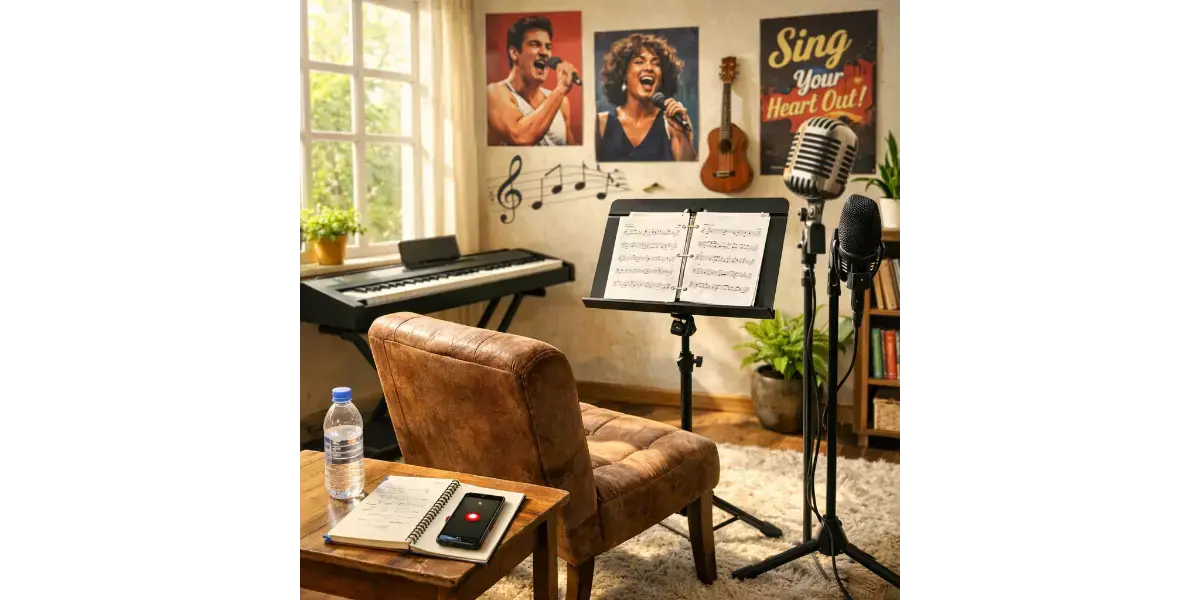
What to Bring
You don't need much, but having a few key items will help your lesson run smoothly.
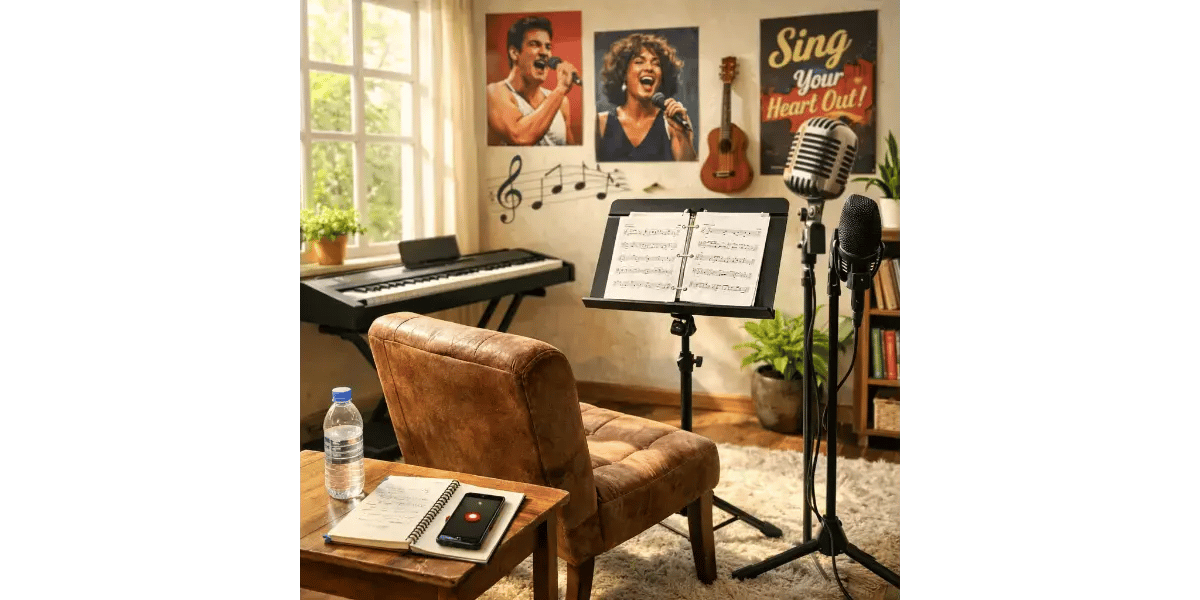
- Water Bottle: Staying hydrated is crucial for vocal health. Sipping water throughout your lesson will keep your vocal cords lubricated.
- Notebook and Pen (or a Notes App): Your teacher will likely give you exercises and concepts to remember. Taking notes will help you recall what to practice between sessions.
- A Recording Device: Ask your teacher if it’s okay to record the lesson. Listening back to your exercises and their feedback is an invaluable tool for practice and tracking your progress. Your smartphone’s voice memo app is perfect for this.
- Sheet Music (If You Have It): If there’s a specific song you want to work on, bring the sheet music or lyrics. Don't worry if you don't have one; your teacher will have plenty of material to start with.
What to Wear
Your body is your instrument, so wear something that allows it to function freely. Opt for comfortable clothing that doesn’t restrict your breathing or posture. Avoid tight tops, constricting belts, or heavy necklaces that might get in the way. Think relaxed and ready to move.
Mindset and Expectations
Your mindset is your most powerful tool. It’s normal to feel nervous, but remember your teacher is there to support you, not judge you.
- Embrace Being a Beginner: Every singer, no matter how famous, started with a first lesson. Your teacher knows this and expects you to be a beginner. Allow yourself to be new to this.
- Focus on Progress, Not Perfection: The goal of your first lesson is not to sing perfectly. It’s to learn. Be open to trying new techniques, making strange sounds, and exploring your voice without pressure.
- Be Open and Curious: A great lesson is a two-way street. Come with an open mind, ready to experiment with the exercises your teacher suggests. Curiosity will help you learn faster than criticism ever could.
Pre-Lesson Checklist
A few simple actions right before your lesson can make a big impact:
- Hydrate Well: Drink plenty of water in the hours leading up to your lesson.
- Avoid Certain Foods/Drinks: It’s wise to avoid dairy, caffeine, and extremely cold or sugary drinks right before singing, as they can produce excess mucus or dry out your throat.
- Do Some Light Stretching: Gently stretch your neck, shoulders, and back to release tension and prepare your body for good singing posture.
- Prepare Your Questions: Think about what you want to achieve. Do you have specific questions about your voice? Write them down and bring them with you.
What Happens During a Beginner Singing Lesson?
Now for the main event! While every teacher has their own style, most beginner singing lessons follow a similar structure designed to introduce you to your voice in a safe and supportive way.
The Warm-Up
Just like an athlete warms up their muscles, a singer needs to warm up their vocal cords. Your lesson will almost always begin with gentle exercises to get your voice ready. These aren't about sounding pretty; they're about function.
Your coach will guide you through exercises like:
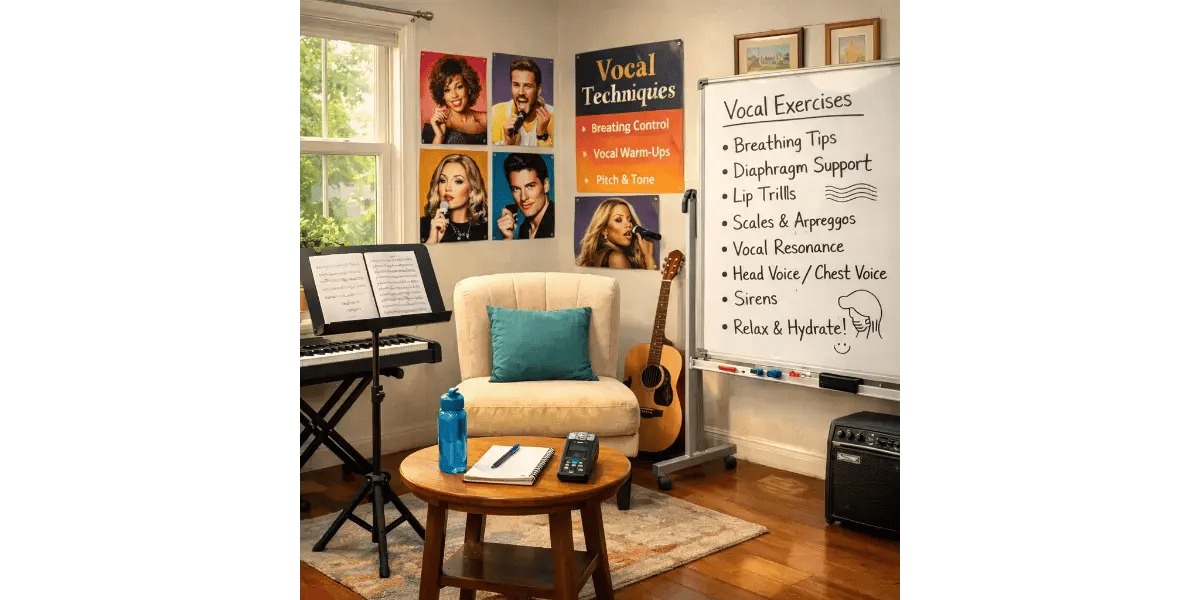
- Lip Trills (Lip Bubbles): This involves blowing air through your closed-but-relaxed lips, making them vibrate. Lip trills are fantastic for encouraging steady airflow, releasing tension, and syncing up all the muscles.
- Humming: A simple hum helps you feel vocal resonance in your face without pressing the tone.
- Sirens or Slides: Sliding your voice from a low to a high note and back down (like a siren) helps gently close and stretch your vocal folds and connect your different vocal registers.
- Breathing Exercises: You’ll learn the fundamentals of diaphragmatic breathing, the engine of your voice. Expect to practice inhaling deeply, feeling your upper abdomen expand, and exhaling on a steady hiss.
These warm-ups are essential for vocal health, preventing strain, and preparing your instrument to sing.
The Voice Assessment
Next, your teacher will want to know your voice. This isn't a test! It's a diagnostic process to understand your natural tendencies, strengths, and areas for improvement.
Your teacher will likely ask you to do simple tasks to check your:
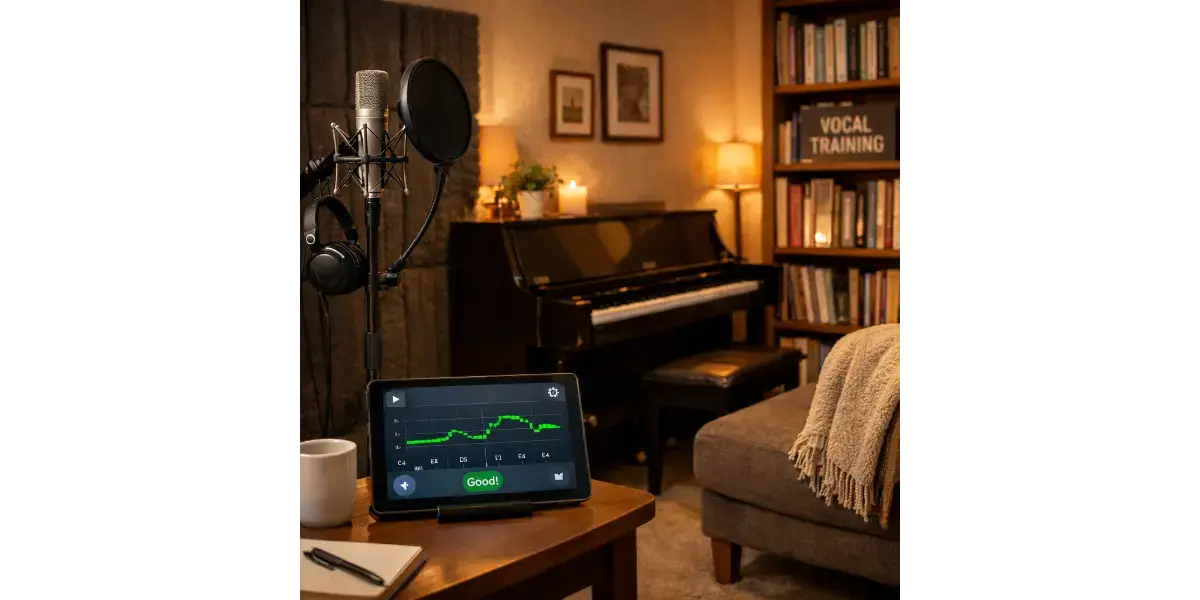
- Vocal Range: How high and low can you comfortably sing? They’ll probably have you sing simple scales or patterns on a piano to find your current range.
- Pitch Accuracy: Can you match the notes they play on the piano?
- Tone Quality: Is your natural tone bright, dark, breathy, or clear?
- Vocal Breaks: Where does your voice tend to "flip" or break between your chest voice and falsetto/head voice?
This assessment helps your vocal coach for beginners understand your unique instrument, so they can tailor exercises specifically for you.
Learning Basic Techniques
With an understanding of your voice, your teacher will introduce one or two fundamental concepts. For beginners, this often focuses on the "big three": breathing, posture, and pitch.
- Diaphragmatic Breathing: You'll learn how to breathe from your diaphragm, which provides the stable, powerful airflow needed for healthy singing.
- Posture for Singing: Your teacher will show you how to stand or sit to create an open channel for sound, free of physical tension.
- Matching Pitch: You’ll work on exercises to train your ear and voice to work together, ensuring you can sing on key as your vocal folds properly adjust.
- Introduction to Resonance: Your coach might introduce the concept of resonance, where you feel the sound vibrate in your body (like in your chest or face), to help you explore a fuller, richer tone.
Setting Your Goals
Towards the end of the lesson, your teacher will likely chat with you about your goals. Why do you want to take singing lessons? Do you want to join a choir, sing karaoke with confidence, write your own songs, or just explore a new hobby?
Based on your aspirations and their assessment, your coach will help set some personalized goals.
- Short-Term Goals: These might include mastering breath support, improving pitch accuracy on a simple song, or eliminating a specific vocal strain.
- Long-Term Goals: These are the bigger dreams, like expanding your vocal range, developing a powerful belt, or performing on stage.
This conversation is crucial, because it ensures your lessons are built around what you want to achieve.
What NOT to Expect
It’s just as important to know what won't happen.
- You will NOT be judged. A good teacher creates a safe space. They are there to guide, not criticize.
- You will NOT sing perfectly. Expect to make mistakes. Mistakes are how you and your teacher learn what needs work.
- You will NOT need prior musical experience. You don’t need to read music or know music theory to start. That can come later if you're interested.
- You will NOT be pushed to sing difficult songs. Your first few lessons will focus on foundational techniques, not learning a Beyoncé power ballad.
Common Questions from Beginners
It’s natural to have questions. Here are answers to some of the most common ones.
“Do I need to be good at singing already?”
Absolutely not! Singing lessons for beginners are designed for everyone, especially those who have never sung before or believe they "can't sing." Your job isn’t to be good; your job is to be willing to learn. A good coach can work with any voice.
“What if I make mistakes or my voice cracks?”
You will make mistakes, and your voice will probably crack. That’s a guarantee! It’s also a good thing. When your voice cracks or you miss a note, it gives your teacher valuable information about how your vocal muscles work. Mistakes are simply data points on your journey to improvement.
“How long will it take until I see improvement?”
With consistent practice, beginners often notice small but tangible improvements within weeks. You might feel that breathing is easier, your pitch is more reliable, or your tone is clearer. Significant, lasting change takes time. Singing is a physical skill, like a sport. Patience is key.
“Do I need special equipment at home to practice?”
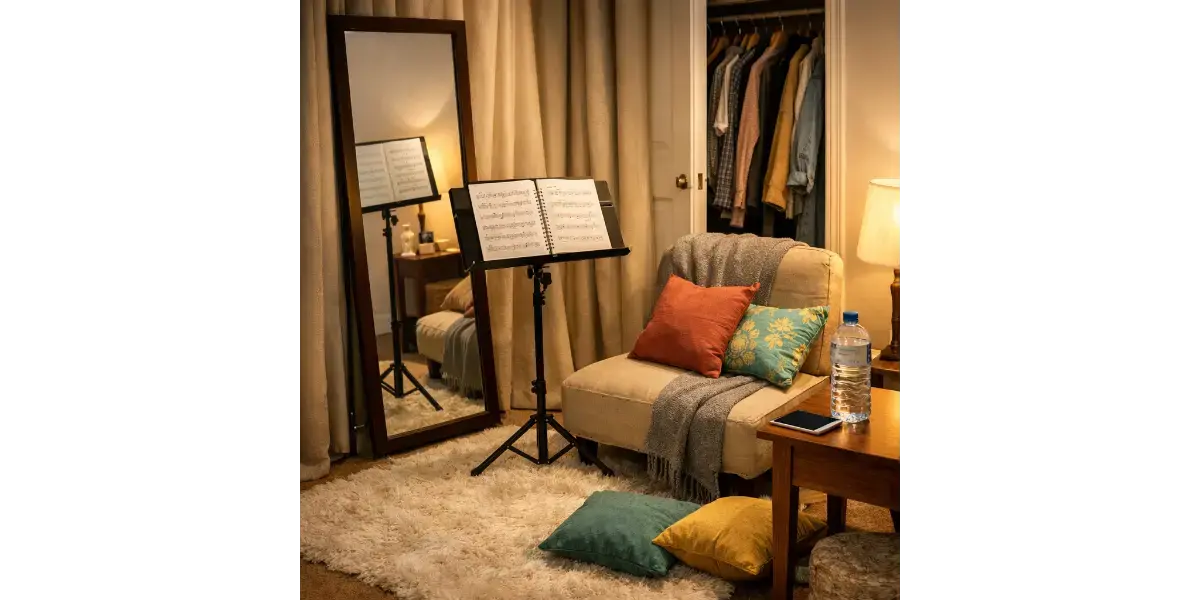
Not at first. All you need is a quiet space where you won't be disturbed, a device to play back your exercises (like your phone), and your own voice. As you advance, your teacher might recommend a keyboard app or a small keyboard, but it’s not necessary to start.
Tips for Making the Most of Your Singing Lessons
Your progress depends as much on what you do between lessons as what you do during them.
- Practice Consistently: Practicing for 15-20 minutes a day is far more effective than one long session per week. Consistency builds muscle memory and reinforces what you learn.
- Communicate With Your Teacher: Be open about your goals, fears, and what you’re feeling in your voice. If an exercise feels uncomfortable or painful, speak up immediately. The more you communicate, the better your teacher can help you.
- Stay Patient and Positive: Learning to sing is a journey, not a race. There will be moments of breakthrough and frustration. Celebrate the small wins, like hitting a note that was difficult or feeling less tension in your throat. Your voice is an instrument, and it takes time to learn how to play it well.
- Create a Simple Practice Routine: A structured routine makes practice easier. Start with the warm-ups from your lesson, move on to the technical exercises your teacher assigned, and finish by applying those techniques to a small section of a song.
Your Journey Starts Now
Your initial singing lesson is a powerful step on an exciting journey of vocal discovery. You now know how to prepare, what to expect, and how to set yourself up for success. Remember, every great singer started exactly where you are, with a desire to learn and the courage to take that first lesson. Your voice has incredible potential, and a teacher is there to help you unlock it.
Ready to take the leap and discover what your voice can do?
Join Free Group Demo!