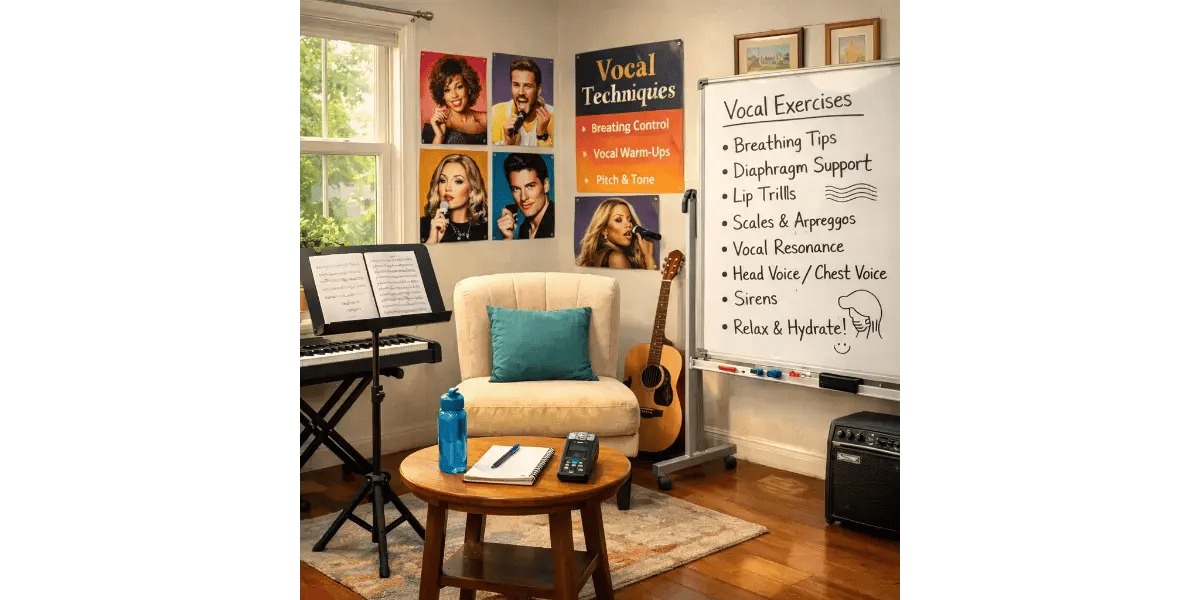
Start Your Voice Training Journey With Confidence
Voice training for beginners does not require talent. It requires consistency, proper guidance, and safe techniques.
If you have always wanted to sing with more confidence, control, and ease but did not know where to start, you are in the right place. Voice training can feel intimidating, especially for adult beginners. You may wonder if it is too late to develop your voice or if singing well is something only a few people are naturally good at. The truth is that anyone can train their voice safely and effectively with consistent correct practice.
This guide walks you through voice training for beginners with a structured 30-day plan. You will learn why voice training matters, discover beginner singing exercises for each week, and understand how to build healthy habits that protect your voice while improving strength, range, and tone. By the end of 30 days, you will feel more confident in your singing abilities and have a clear path to continue growing.
Foundations of Voice Training for Beginners
Before diving into exercises, it is essential to understand a few key principles that will guide your practice and ensure safe singing techniques.
Breath Support: The Engine of Your Voice
Breath is an essential foundation of all singing. Diaphragmatic breathing for singing allows your voice to feel freer, more controlled, and less strained. True breath support helps you sustain notes, control dynamics, and sing for longer periods without fatigue. The breathing muscles supply oxygen and airflow to support the adjustments of the vocal folds and vocal muscles in creating sound. Getting your breath engine running, energizes your voice to move.
For a deeper look at breathing technique, explore our breathing exercises for singing.
How to Find Your Diaphragm:
- Sit or lie down with a straight back.
- Place one hand on your chest and one on your upper abdomen.
- Inhale through your nose. Your upper abdomen should expand while your chest stays relatively still.
- Exhale slowly, feeling your upper abdomen fall.
Visual Cue: Your shoulders should remain relaxed. Movement happens in the upper abdomen.
Quick Win: After a few breaths, notice how your body and voice feels light and more energetic.
Posture and Relaxation: The Alignment of Your Body
Good posture helps release tension and allows your vocal muscles to move freely. Keep:
- Shoulders down
- Jaw relaxed
- Neck free of tension
Tension in any of these areas can limit your range and create strain. Relaxation is especially important for adult beginner singers who may unconsciously tighten muscles when trying to sing higher notes. As unnecessary body tension fades away, then you feel flexible and ready to sing.
Registration and Resonance: The Vibrator and Amplifier of Your Voice
Registration is concerned with the vocal muscles (closers and stretcher) that adjust your vocal cords for pitch, volume, and vowel. As these vocal muscles and your vocal cords adjust freely, along with healthy vowel sounds, then resonance begins to appear and your voice rings.
Resonance is the natural vibration that makes your voice sound rich and full. Beginners often do not know how to feel their sound. Paying attention to resonance allows you to sing with a clear ringing tone while also allowing your vocal muscles and vocal cords to make adjustments.
Beginner Clarifications:
- Mask Sensations: The front of your face around the nose, cheekbones, and lips where sound vibrations feel strong in the bottom of your range. As you sing higher you will feel the resonant vibrations move up, vibrating bones around the eyes and forehead.
- Sirens: A smooth glide through your vocal range to train flexibility and connection.
- Resonance: How your voice naturally resounds when vocal muscles move and vowels are well shaped, all syncs up and buzzing projection happens. Notice feelings in your chest, mouth, face, or even forehead area on the highest notes.
- Arpeggios: Notes of a chord sung in sequence to practice pitch and vocal agility.
Quick Win: Try humming gently on a lower note and feel vibrations in your mask area. Your tone should sound brighter without forcing your voice. Then, try humming up and down a scale and pay attention to the change in resonance vibration as well as pitch adjustments.
Your First 30 Days of Voice Training: Beginner Singing Exercises
This 30-day plan is designed for adult beginner singers. Each week builds on the previous one, starting with foundational skills and gradually adding more exercises. Consistency is key. Even short daily sessions can lead to significant progress.
Week 1: Laying the Foundations
Focus: Breath support, basic warm-ups, and gentle vocal exploration
Daily Routine (10–15 minutes):
- Breathing Exercises (3 min): Practice diaphragmatic breathing and sustained “sss” sounds to experience steady airflow.
- Lip Trills (3 min): Blow air and vocalize through lightly closed lips while moving up and down your range.
- Humming (4 min): Feel vibrations in your lips and face without pressing the tone.
- Vowel Sounds (3 min): Sing “ah,” “ee,” and “oo” on a comfortable pitch.
For additional warm-up exercises, explore Daily Vocal Warmups for Every Singer.
Mini Checklist for Week 1:
- Upper abdomen expands naturally when inhaling
- Voice feels energized after exercises
- No strain while humming or lip trilling
Quick Win: Your voice should feel lighter and more energized after these sessions.
Pro Tip: Focus on comfort and avoid pushing your voice beyond its natural limits. These are safe singing techniques that prevent strain through a combo of relaxation and readiness.
Week 2: Exploring Your Range
Focus: Find your comfortable notes and begin safe range expansion
Daily Routine (15–20 minutes):
- Warm-Up (5 min): Repeat Week 1 exercises.
- Scale Practice (5 min): Sing simple five-note scales within your comfort zone. Gradually move up and down. Feel pitches adjust like steps on a staircase or gear shifting in a car.
- Humming Exercises (5 min): Allow your voice to resonate in the mask area on the lower notes and sense how vibrations move up when humming higher.
- Short Song Practice (5 min): Apply your exercises to a familiar song, focusing on breath support and flowing vowel sounds.
For more help understanding your vocal range, read What Is My Vocal Range? How to Identify, Master, and Expand Your Range.
Mini Checklist for Week 2:
- Can sing low, mid, and high notes more comfortably
- Breath remains steady and flowing during scales
- Voice feels supported and free of strain
Did You Know? Many adult beginners notice real progress this week. Your tone may feel brighter and more present, and notes may feel easier to reach.
Want feedback on your progress so far? Get a free trial lesson with a certified voice coach.
Week 3: Building Strength and Consistency
Focus: Vocal endurance, pitch accuracy, and consistent tone
Daily Routine (20–25 minutes):
- Breathing Warm-Up (5 min): Diaphragmatic exercises and hissing to strengthen and steady airflow; supporting your vocal muscles to energetically move.
- Lip Trills with Scales (5 min): Add longer scales and small octave jumps to feel registers shift (from heavy to light) and make bigger pitch adjustments.
- Resonance Exercises (5 min): Use humming and gentle sirens to expand coordination.
- Song Application (5–10 min): Practice short songs, focusing on pitch steps, even tone, and connected phrasing.
For additional help with vocal strength, see How to Strengthen Your Singing Voice.
Mini Checklist for Week 3:
- Can sustain notes longer without strain
- Accurate pitch is consistent across phrases
- Small octave jumps feel comfortable
Quick Win: Record yourself once this week. You will notice clearer tone and improved control.
Week 4: Applying Skills and Tracking Progress
Focus: Combine technique with musicality and track growth
Daily Routine (25–30 minutes):
- Warm-Up (5 min): Breathing, lip trills, and humming
- Scales & Arpeggios (5–10 min): Practice carefully within your range. Focus on pitch adjustments (feeling and visualizing steps on a staircase or gear shifting in a car).
- Song Practice (10–15 min): Choose songs that stay within your safe range. Focus on smooth transitions, resonance sensations, and steady airflow.
- Cool-Down (5 min): Gentle descending hums or soft sighs
Progress Tracking Table:
Skill
Start
End of Week 4
Notes
Pitch changes
Feel and visualize pitch adjustments as different steps or gear changes
Breath support
Steady airflow (no holding or pushing)
Tone consistency
Even sound quality across range
Range expansion
Low, mid, high comfortable
Song mastery
Sing short songs without strain and less fatigue
Quick Win: Celebrate singing a new note clear and clean, or sustaining a phrase longer.
Tip: Daily consistency is more important than session length. Even 20 minutes daily is effective.
Common Beginner Mistakes
- Skipping Warm-Ups: Always prepare your voice before singing.
- Pushing Too Hard: Avoid straining for high or low notes. Progress is gradual.
- Tension: Keep neck, jaw, and shoulders relaxed. Align your body for freedom.
- Inconsistent Practice: Short, regular sessions are more effective than occasional long sessions.
Pro Tip: Mistakes are normal and help you understand your voice better.
Next Steps After 30 Days
After completing your first month, you will have a stronger foundation and a clearer understanding of your voice.
- Continue daily practice and gradually expand exercises.
- Experiment with songs slightly outside your comfort zone to stretch your range safely.
- Explore techniques such as dynamics, vibrato, and phrasing once confident.
- Consider working with a vocal coach for personalized feedback.
- Always listen to your body. If your throat feels tired or strained, rest. Using safe singing techniques is key to long-term improvement.
Success Checklist: What You Should Achieve After 30 Days
- Warm-up safely (relaxed and ready)
- Breathe with diaphragmatic support
- Sing basic scales feeling pitch changes
- Identify your comfortable vocal range
- Sing a short song without strain
Join Free Voice Lesson
Ready to build your voice training routine with personalized guidance? Join Free Voice Lesson and take the next step in your singing journey.