

Mike Elson
FOUNDER | CEO
04/01/2026 |37 min to read
You Can Learn To Sing – Even Without Perfect Pitch
.webp)
Learn to Sing on Pitch: Mastering Pitch Accuracy, Relative Pitch, Ear Training, and Singing in Tune with Your Own Voice
Have you ever wondered if you can learn to sing or develop perfect pitch? Singing loudly in the shower doesn’t require a trained ear, but if you want to learn to sing in tune with confidence - matching every musical note accurately - it helps to understand singing pitch accuracy and master key skills like relative pitch and ear training.
While anyone can learn how to sing and improve their vocal skills, acquiring perfect pitch (also called absolute pitch) is a different matter altogether. Perfect pitch means you can identify or sing any note - like middle C or any other musical note - without any reference point, just by hearing it in your head. This rare talent, known as perfect pitch, is something most singers do not naturally have, but you can greatly improve your singing by training your ear, practicing vocal exercises, and building good relative pitch. Many people who have perfect pitch often discovered this ability when they first started singing or engaging with music at a young age, showing how early musical experiences can play a key role in developing pitch recognition.
At some point, every aspiring singer and musician benefits from understanding reference pitch, relative pitch, and practicing sheet music or solfege for better note recognition. Good news: you do not need perfect pitch to sing on pitch! Most musicians and singers rely on excellent relative pitch - hearing how two notes relate to each other - to sing accurately, harmonize, and perform with other musicians.
Before diving into singing lessons or a singing training program, let’s clarify some important concepts: perfect pitch (absolute pitch), relative pitch, being tone deaf, and how to use ear training techniques and vocal exercises to improve your own singing and pitch accuracy.
Perfect Pitch and Absolute Pitch: Understanding Reference Notes and Pitch Accuracy
Perfect pitch and absolute pitch mean the same thing. This skill lets you sing or play notes correctly, every time, with no external reference. In other words, you are able to identify and internalize each note correctly, accurately perceiving, producing, and associating musical notes without needing a reference. For example, if your vocal coach or an app asks for a reference note - like middle C - you could sing it exactly, every time, without hearing a first note. Having perfect pitch is a huge part of musicianship for some, but is quite rare; most people, including many singers, musicians, and even vocal coaches, do not have it naturally.
You may wonder, “How do I acquire perfect pitch?” Scientific consensus and music education experts agree: if you haven’t shown evidence of perfect pitch by about age 8, it’s unlikely you will develop it later. Developing perfect pitch as an adult - even with dedicated practice or specialized singing pitch accuracy programs - is extremely difficult and rare, though there are always stories of musicians who have made surprising progress through consistent ear training, reference pitch practice, and recognizing intervals. Practicing identifying notes without a reference tone is a common method used by individuals attempting to develop perfect pitch.
Instead of focusing on acquiring perfect pitch, your singing journey should emphasize relative pitch, reference pitch strategies, and mastering the vocal exercises that great singers use to train their musical ear and perform at their best.
History and Origins of Perfect Pitch
The fascination with perfect pitch dates back centuries. Early references can be found in the writings of Greek philosophers and Chinese scholars, who observed extraordinary musical abilities in certain individuals. In Western classical music history, perfect pitch was often considered a special gift of prodigies and master composers. For example, renowned musicians such as Mozart, Beethoven, and Chopin were believed to possess some form of absolute pitch, enchanting audiences with their uncanny ability to identify and reproduce notes effortlessly.
Throughout the 19th and 20th centuries, the scientific study of perfect pitch grew alongside advances in psychology and music education. Researchers began to examine whether perfect pitch was an innate talent or a learned skill, inspiring generations of studies on child prodigies, family inheritance, and early musical training. Modern technology has since enabled even more exploration into how the brain processes pitch, revealing subtle differences in auditory perception between those with and without perfect pitch.
Today, our understanding recognizes that while perfect pitch is rare, it is not exclusive to classical music or professional musicians. It has been documented in jazz legends like Miles Davis and pop icons such as Mariah Carey. The evolving science behind pitch recognition continues to shape how educators, singers, and musicians approach ear training and musical development, emphasizing that excellent musicianship is possible with or without absolute pitch.
Pitch Fundamentals: How to Learn to Sing, Use a Reference Note, and Achieve Pitch Accuracy for Singing in Tune
Pitch is simply how high or low a sound is produced. In music theory, every note has a specific pitch, measured in Hertz (Hz), which describes the sound’s frequency, how many vibrations per second. For singers, training pitch means learning to sing the correct note at the right time, and being able to match a reference pitch (like a note played on a piano, guitar, or tuning fork).
Musicians use sheet music, their own voice, and reference notes to improve pitch accuracy. Mastering the skill of singing the correct note, whether you sing sharp or need to adjust for flat notes, is a matter of regular ear training, identifying notes, and listening to your own singing.
A common starting place is singing simple scales (like Do-Re-Mi) and practicing pitch matching. Before moving on to other notes, it's important to be able to accurately identify and sing one note, as this builds a strong foundation for recognizing every other note in the scale. Practicing with scales helps develop both muscle memory and ear training; over time, you’ll learn to recognize the first note (reference note), then sing other notes and intervals correctly using good relative pitch with a consistent mental representation and physical feel of each note.
- Practice daily with simple scales and song matching to improve singing skills.
- Shorter, daily practices are more effective than infrequent long sessions for learning to sing.
Effective training begins by anchoring the 'inner ear' to a single reference note. This foundational step supports further pitch accuracy and helps you build reliable pitch recognition skills. You will also begin to “feel” the pitch and all the adjustments so that you remain in tune.
Record your own singing and listen for pitch; apps can help you determine if you are singing the right note or need to adjust. Muscle memory develops with consistent practice, so you’ll naturally sing in tune as your ear improves.
What Does Being Tone Deaf Mean for Singing?
Being tone deaf means struggling to hear pitch differences between notes. This can impact your ability to sing on pitch or recognize intervals, but the good news is: most people are not truly tone deaf. With ear training, using exercises, apps, and frequent singing, you can train your ear.
If you consider yourself tone deaf, focus on ear training exercises, singing lessons with a voice teacher or vocal coach, and listening to notes and intervals. Recognizing intervals (the difference between two notes) and practicing with a reference note are key steps in overcoming tone deafness. Learning solfege (Do-Re-Mi) also helps with noticing differences in pitch steps.
Common Challenges in Learning Pitch Accuracy and How to Overcome Them
Learning pitch accuracy comes with a unique set of challenges for many singers. Here are some common issues and strategies to address them:
- Vocal Strain: Beginners sometimes push or strain their voices to reach certain pitches, leading to discomfort or even injury. Always warm up your voice, maintain good posture, and stay hydrated. If you notice discomfort, take breaks and consider working with a voice teacher or vocal coach to learn proper technique.
- Pitch Perception Difficulties: Some people initially have trouble distinguishing between different pitches, especially in the early stages of training. To improve pitch perception, use ear training exercises - start by matching single notes, then gradually progress to intervals and simple melodies. Apps and online tools can provide immediate feedback to help you improve.
- Matching Pitch Consistently: Singing in tune can be tough, especially when nerves kick in or when singing with accompaniment. Record yourself singing along with a piano or a backing track and compare the notes. Regular practice in a relaxed environment helps build confidence and steadier pitch control.
- Overcoming Self-Doubt: Frustration and self-doubt are common barriers. Remember, developing pitch accuracy takes time and persistence. Celebrate small improvements and set achievable goals for each practice session.
By understanding and addressing these challenges, you can steadily improve your pitch accuracy and enjoy more confident, tuneful singing. Being tone deaf means struggling to hear pitch differences between notes. This can impact your ability to sing on pitch or recognize intervals, but the good news is: most people are not truly tone deaf. With ear training- using exercises, apps, and frequent singing - you can retrain your ear.
If you consider yourself tone deaf, focus on ear training exercises, singing lessons with a vocal coach, and listening to notes and intervals. Recognizing intervals (the difference between two notes) and practicing with a reference note are key steps in overcoming tone deafness. Learning solfege (Do-Re-Mi) and using apps to identify notes by ear, support your goal to sing in tune, even without perfect pitch.
Learn to Sing with Pitch Perfect Ear Training: Mastering Relative Pitch and the Reference Note
Relative pitch is the ability to hear and understand the distance, or interval, between two notes. While perfect pitch allows someone to identify a note without any reference, relative pitch depends on comparing pitches. For singers, this distinction is important: although perfect pitch is rare, strong relative pitch skills are both attainable and essential for most musical tasks.
How Relative Pitch Differs from Perfect Pitch
- Perfect Pitch (Absolute Pitch): The ability to identify or sing a note without any external reference (such as knowing an "A" just by hearing it).
- Relative Pitch: The ability to determine how far apart notes are, or to identify a note based on its relationship to another known note. This is the skill that lets you harmonize, match a melody, or sing in tune with others.
Perfect pitch is often seen as a natural talent, while relative pitch can be developed by anyone with practice. In real musical settings - like singing in a choir, playing in a band, or learning a new song by ear - relative pitch is usually far more useful.
Why Relative Pitch Matters for Singers
- It’s crucial for matching melodies and harmonizing with other singers or instruments.
- It helps singers learn songs more quickly by understanding how each note relates to the previous and next ones.
- It is foundational for sight-singing, improvisation, and transcribing music by ear.
Exercises to Develop Relative Pitch
Regular practice strengthens your relative pitch over time. Here are some effective exercises:
- Interval Recognition: Listen to two notes played in sequence and try to identify the interval between them (such as a third or a fifth). Many online apps and piano keyboards can help with this.
- Reference Pitch Matching: Start with a familiar note (like middle C), then practice singing various intervals above or below it.
- Solfege Practice: Use solfege syllables (Do-Re-Mi-Fa-So-La-Ti-Do) to sing scales and intervals. This helps connect musical relationships to specific verbal cues.
- Call and Response: Have a friend or coach sing a short melody, and try to reproduce it immediately by ear.
- Active Listening: Listen attentively to music and try to hum back the melody or harmony, focusing on how each note moves from the last one.
Consistent practice with these exercises, using tools like tuning forks, piano apps, or recording your own voice, will help you become confident in singing and recognizing notes, even if you don’t have perfect pitch. Remember: nearly every accomplished musician relies on relative pitch in daily music-making.
Understanding Relative Pitch and Its Importance
Relative pitch refers to your ability to identify the distance, or interval, between two musical notes, regardless of their starting points. Instead of simply recognizing a note by its name, as in perfect pitch, you learn to recognize a note based on how it relates to a previous note. This skill is vital for singers, as melodies are formed from a series of changing pitches.
The importance of relative pitch can't be overstated. With strong relative pitch, singers can:
- Accurately reproduce melodies after just a few listens.
- Harmonize with other singers or instruments more easily.
- Sight-sing music by understanding interval relationships.
- Learn new songs quickly, as recognizing intervals and patterns becomes second nature.
Professional musicians routinely rely on relative pitch to navigate ensemble singing, adjust to key changes, and maintain pitch accuracy even without instrumental accompaniment. Essentially, a well-trained sense of relative pitch opens the door to more expressive and flexible singing, making it one of the most valuable skills for both beginners and advanced vocalists.
Step-by-Step Guide to Daily Ear Training Routine
Establishing a daily ear training routine is key to improving your singing accuracy and overall musicianship. Below is a suggested step-by-step practice you can adapt:
- Warm-Ups (5-10 minutes)
- Start with gentle vocal exercises: humming, lip trills, or simple scales.
- Focus on relaxed breathing and releasing tension in your neck and shoulders.
- Reference Pitch Practice (5 minutes)
- Play or sing a reference note (such as middle C) using a piano, app, or tuning fork.
- Match your voice to the reference note and repeat until you can hold it steadily.
- Interval Training (10-15 minutes)
- Sing basic intervals (e.g., major third, perfect fifth) starting from your reference pitch.\
- Use an app or online tool that plays intervals and provides instant feedback on your accuracy.
- Gradually expand to more challenging intervals and combinations.
- Melodic and Harmonic Exercises (10 minutes)
- Practice singing short melodic phrases or simple songs by ear.
- Try harmonizing with a recorded line or with another singer (or an app’s harmony setting).
-
Pitch Accuracy Drills (5-10 minutes)
-
Use pitch detection apps to monitor how closely you stay on target notes during exercises.
-
Aim for consistency and improvement, not perfection - track your progress over time.
-
-
Recording and Self-Review (5 minutes)
-
Record a short practice session or sing a new piece.
-
Listen back and note areas where your pitch drifts, then target those in your next session.
-
-
Cool Down (2-3 minutes)
-
Finish with gentle humming or soft, descending scales to relax your voice.
-
Consistency is more important than duration, short daily practice helps your ear and voice grow in sync.
-
Learn How to Sing: Using Reference Pitch, Vocal Exercises, Ear Training, and Pitch Accuracy
A reference pitch is a “home base” for singers. Most training, whether in singing lessons or a structured singing training program, begins with playing or singing a reference note - often middle C - and building from there. Using a tuning fork, piano key, or tuning app as your reference pitch, you can practice identifying and singing other notes.
Vocal exercises that focus on scales, arpeggios, and interval recognition will help you build accurate pitch. These exercises develop your musical ear, your vocal cords ability to adjust for different pitches, and the muscle memory needed for singing pitch accuracy. Also, practicing with sheet music and regularly checking with your own singing or a reference pitch will ensure you consistently sing in tune on the correct notes.
How to Learn to Sing Pitch Perfect: Singing in Tune with Ear Training and Pitch Accuracy
Pitch accuracy is a huge part of learning how to sing and a big reason why so many singers use ear training apps and vocal coaches. Whether you’re working through sheet music, recording software, or an online singing training program, the following steps will help:
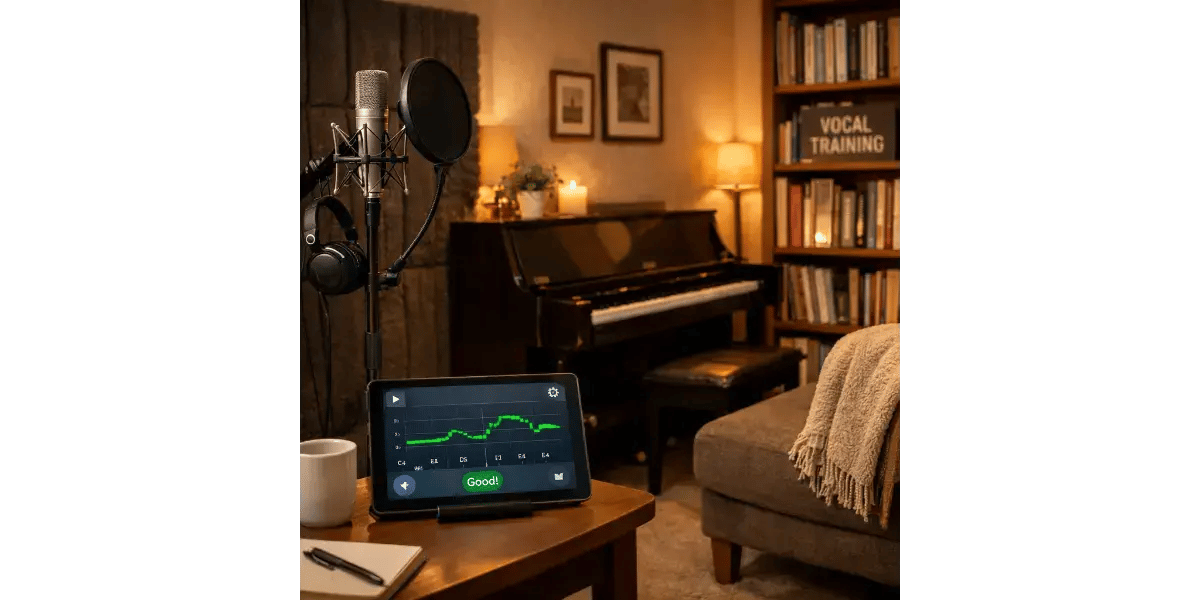
- Use apps and tools to check your singing pitch accuracy. Software with real-time pitch detection and visual feedback, like Pitch Perfector or TonalEnergy Tuner, can help you learn how to sing in tune.
- Regularly record your own singing and compare it to a reference pitch or the original song.
- Practice identifying notes, singing scales, and matching a reference pitch using both your own voice and instruments.
- Take online singing lessons or work with a vocal coach to get professional feedback and correct bad habits.
- Learn basic music theory and how to read sheet music for pitch-perfect performances.
- Engage in ear training exercises, such as listening to two notes and recognizing intervals or singing back the notes you hear.
- Use singing pitch accuracy exercises that focus on vowels (“ah,” “ee,” “oo,” “ay”) to refine your tone and consistency.
The vocal folds produce pitch in the same way as a stretched rubber band - by tightening or loosening to change the frequency of vibration. Understanding this consistent mechanism can help singers control their pitch more effectively as they feel how the vocal cords adjust.
Remember, shorter, daily sessions are better than long, infrequent practice. Consistent practice with ear training, pitch exercises, and matching musical notes will help you sing perfectly in tune.
Role of Breath Control and Posture in Singing Pitch Accuracy
Developing accurate pitch in singing relies not only on ear training, but also on strong breath control and proper posture. Diaphragmatic breathing - breathing deeply into your upper abdomen area instead of your high chest with raised shoulders - gives you better airflow and more steady vocal support, which helps maintain consistent pitch and tone throughout a phrase. By using your diaphragm, you reduce strain on your throat and are able to sustain notes clearly.
Equally important is keeping a tall, relaxed posture. When you stand or sit up straight with your shoulders back and neck aligned, your lungs expand more easily and your vocal cords can move freely. Good posture opens your airway, making it easier to control your voice and sing the correct pitches.
Paying attention to both breath and posture is essential for singing in tune and developing long-term vocal health. Maintaining a tall posture and practicing diaphragmatic breathing ensures consistent airflow, which is essential for singing with pitch accuracy and control.
Many singers report that learning to sing in tune is a gradual process that requires consistent practice and ear training.
Fun Techniques: Color and Sound Associations
Some singers find it helpful to link musical notes to colors or familiar sounds (like associating the note C with the color red or the sound of a bell). These creative reference points enhance your memory and pitch recognition, turning ear training into a more engaging process.
Using Technology to Easily Tune
In today’s digital world, technology has become a huge part of how singers learn to sing, develop perfect pitch, and improve singing pitch accuracy. With a wide range of apps and software now available, it’s easier than ever to practice ear training, identify notes, and tune your voice with precision - all from the comfort of your own home.
Apps like Perfect Pitch, Sing Sharp, and Yousician are designed to help singers at every level. These tools offer interactive singing lessons, reference pitch generators, and vocal exercises that target both perfect pitch and good relative pitch. For example, the Perfect Pitch app features a pitch perfector tool that gives real-time feedback on your singing pitch accuracy, helping you easily tune your voice and identify notes as you practice. Sing Sharp provides a variety of ear training routines and vocal exercises, guiding you through the process of developing perfect pitch and mastering interval recognition.
Using technology to easily tune your voice means you can practice with a reference pitch at any time. Many free apps allow you to sing along with a reference note, check your pitch accuracy instantly, and track your progress over time. This immediate feedback is invaluable for developing muscle memory and training your ear to recognize when you’re singing the right note or need to adjust.
How Sheet Music and Music Theory Improve Pitch
Learning to read sheet music and understand basic music theory is also a valuable tool for singers aiming to master pitch. Sheet music provides a visual map of melodies, intervals, and harmonies, which helps you understand exactly what notes you need to sing. By following the notes on the staff and paying attention to key signatures and accidentals, you can train your eyes and ears to work together, making it easier to recognize when you’re singing in tune.
Music theory deepens your understanding by explaining how scales, intervals, and chords are constructed. This knowledge helps you predict note relationships and anticipate the next notes in a melody, sharpening your sense of pitch accuracy. Practicing solfège (do, re, mi, etc.) and interval recognition while reading sheet music can strengthen both your ear and your musicianship.
Incorporating sheet music and theory practice into your daily routine - such as sight-singing new melodies or analyzing harmonies - will give you more confidence when singing, make it easier to stay in tune, and help you become a more versatile musician.
Technology and Apps for Singing Practice: Detailed Reviews and Comparisons
There are many singing and ear training apps, each with features suited for different skill levels and learning goals. Here’s a comparison of some popular options:
|
App |
Key Features |
Best For |
Pros |
Cons |
Free App |
|
Perfect Pitch |
Real-time pitch feedback, ear training games |
Beginners – Intermediate |
Simple interface, gamified practice |
Some advanced features are paid |
Yes (basic version) |
|
Sing Sharp |
Vocal warm-ups, pitch analysis, progress tracking |
All levels |
Wide range of exercises, good analytics |
Requires account for tracking progress |
Yes |
|
Yousician |
Structured lessons, instant feedback, singing and instrument support |
Beginners |
Fun lessons, guided paths |
Subscription needed for full access |
No (free trial only) |
|
EarMaster |
Interval training, rhythm exercises, solfege |
Intermediate – Advanced |
In-depth drills, customizable lessons |
Steeper learning curve, not as visual |
No |
|
Vanido |
Personalized exercises, daily goals, pitch correction |
Beginners |
Free content, daily reminders |
Limited song library |
Yes |
|
Vocal Pitch Monitor |
Pitch visualization in real time |
Intermediate – Advanced |
Clear pitch tracking, record & playback |
Technical interface, less guidance |
Yes |
|
Smule |
Social singing, karaoke tracks, instant pitch scoring |
All levels |
Large community, fun duets |
Not focused on technique building |
Yes (with in-app purchases) |
Many of these apps are available as free apps, making them accessible to anyone who wants to learn to sing perfect pitch without upfront costs. Using a free app allows you to practice real-time pitch correction and monitor your progress without financial barriers, making pitch training more convenient and affordable.
How to Choose the Best App for Your Needs
- Beginners: Look for apps with gamified elements and instant feedback such as Perfect Pitch, Sing Sharp, or Vanido.
- Intermediate/Advanced Singers: Consider apps offering deeper exercises in interval recognition, rhythm, and pitch analysis like EarMaster or Vocal Pitch Monitor.
- Social or Fun Learning: If you love singing along with others, try Smule for its community and karaoke features.
Before committing, try out a few free versions to see which interface and feedback style keep you motivated. Consider your main focus, whether it’s pitch accuracy, sight-singing, ear training, or just having fun, and choose an app that aligns with your goals.
With the right technology and consistent practice, you can sharpen your ear, control your pitch, and enjoy the journey of learning to sing.
Recognizing Intervals, Ear Training, and Pitch Accuracy: Learn to Sing and Master Singing in Tune
Whether you’re learning solfege, practicing with sheet music, or using modern singing apps, the process of identifying notes, recognizing intervals, and connecting your ear to your own voice is vital. Apps for ear training, pitch detection, and singing melody matching make progress easier and help many singers develop their skills quickly. For example, apps like EarMaster and Perfect Ear provide structured drills for ear training. Refer to tools like free apps, recording software, and online singing communities for support and shared progress.
Essential Tips to Learn How to Sing Perfect Pitch, Improve Relative Pitch, Ear Training, and Pitch Accuracy
- Use a tuning fork, instrument, or reference note on an app as your pitch guide.
- Practice vocal exercises like scales and arpeggios daily.
- Try out new technologies: free pitch apps, sheet music readers, and online pitch trainers.
- If you have questions about your singing, ask a vocal coach or join music forums for feedback and guidance.
- Participate in singing lessons, ear training programs, and online communities to optimize your musical education.
- Find your vocal range, and choose songs and exercises that fit your abilities.
Perfect Pitch Perfector: Ear Training and Pitch Accuracy Program to Learn to Sing
The Perfect Pitch app is an innovative tool for singers looking to improve their pitch accuracy and develop their ear. Perfect Pitch helps users improve their singing accuracy, pitch recognition, and overall musical skills through targeted exercises and feedback. The app offers a structured singing training program with real-time pitch detection, interactive vocal exercises, and comprehensive tracking of your progress. By using singing reference notes, integrated sheet music, and daily statistics to measure your pitch today, users can optimize their singing practice and develop pitch-perfect skills.
Features include:
- Vocal exercises for recognizing single notes, two notes, and intervals.
- Ear training routines to help you easily tune and match notes.
- Music theory lessons and sheet music integration for developing absolute and relative pitch skills.
- Vocal range and pitch accuracy feedback, so you can sing in tune and track your improvement every day.
- A training program with 10 levels and over 1000 exercises designed to improve your musical sense and pitch accuracy.
Whether you’re learning how to sing with other musicians or training solo, this singing training program helps you target weak spots and build confidence in your own voice.
Personal Stories and Testimonials of Learning Pitch
Many individuals have experienced remarkable improvement in their pitch accuracy through dedicated practice and ear training. For example, Sara, a choir singer, initially struggled to match pitches with her group. After several months of daily interval exercises and using pitch training apps, she found herself able to sing confidently in tune and even identify notes by ear.
Another learner, James, always admired musicians with pitch accuracy but believed it was out of his reach. By committing to a structured ear training routine - including singing with a reference note and recording his progress - he steadily developed strong relative pitch skills. Today, James can recognize melody lines and keys without an instrument, greatly enhancing his musical enjoyment.
These real-world stories showcase how persistence, the right tools, and regular training can help anyone improve their pitch accuracy - and, for a few, even unlock the skill of perfect pitch.
Frequently Asked Questions (FAQ) About Perfect Pitch and Singing in Tune
Can adults learn perfect pitch?
While perfect pitch tends to develop most easily in early childhood, some adults have reported improvements in pitch recognition with consistent and focused training. However, building strong relative pitch is more widely achievable for adults and remains highly valuable for musicianship.
Is perfect pitch necessary to be a good singer?
No, perfect pitch is not necessary to sing well. Most accomplished singers and musicians rely on relative pitch - the ability to identify notes based on a reference point. Good relative pitch, ear training, and practice are the foundations of accurate singing and musicality.
How long does it take to learn to sing on pitch?
The timeline varies for each person, depending on prior experience, practice habits, and natural aptitude. Many people notice improvements in their pitch accuracy within a few weeks to a few months of regular, mindful ear training and singing practice. Consistency and patience are key to steady progress.
Next Steps For Learning
Learning perfect pitch is rare, but with practice, anyone can improve their singing pitch accuracy through dedicated ear training, reference note practice, and consistent use of vocal exercises. Start by training your ear - using tuning forks, free apps, or singing lessons - to recognize notes and intervals. Emphasize developing good relative pitch and participate in singing communities for support.
Remember:
- Use a reference note every day.
- Record and listen to your own singing.
- Practice consistently, focusing on short, daily sessions for best results.
With persistent effort, support from singing lessons or vocal coaches, and the right music tools, you can learn how to sing on pitch and become the confident singer you want to be. Start practicing today with a pitch app or reference pitch instrument and discover how far your singing journey can take you!
Learning to Sing with Ease
Learning to sing with ease is all about combining effective technique, consistent practice, and a strong sense of relative pitch. One of the best ways to accelerate your progress is to take singing lessons with a qualified vocal coach. A vocal coach can provide personalized feedback, help you identify areas for improvement, and guide you through vocal exercises tailored to your unique voice.
Practicing vocal exercises and engaging in regular ear training are essential steps in developing muscle memory and improving your pitch accuracy. These exercises help you internalize the correct way to produce notes, making it easier to sing accurately and effortlessly. Many singers also benefit from studying sheet music and learning music theory, as these tools deepen your understanding of vocal melody and the structure of songs.
Learning solfege - a system that assigns syllables like Do, Re, and Mi to notes - can further enhance your pitch recognition and make it easier to sing melodies by ear. With good relative pitch, you’ll find it much simpler to match notes, harmonize with others, and sing confidently in any musical setting.
Remember, learning to sing with ease is a journey that requires patience, dedication, and consistent practice. By working with a vocal coach, practicing vocal exercises, and building your knowledge of music theory, you’ll develop the skills and confidence needed to sing beautifully and effortlessly. Many singers have followed this path to success, and with the right approach, you can too!
Final Thoughts on Singing in Tune
Singing in tune is one of the most important skills for any aspiring vocalist, forming the foundation of confident and expressive singing. At its core, singing in tune means matching your voice to the correct musical notes, ensuring that each note you sing aligns with the intended melody. While some people believe that only those with perfect pitch (or absolute pitch) can sing accurately, the truth is that most singers rely on relative pitch to achieve great results.
Perfect pitch is the rare ability to identify or produce a note without any reference pitch, but it’s not a requirement for singing in tune. In fact, developing good relative pitch, the skill of recognizing the relationships between notes, is far more practical and attainable for most singers. With dedicated practice and focused ear training, anyone can improve their singing pitch accuracy and learn to sing confidently.
Using a reference pitch, such as a note played on a piano or guitar, helps you train your ear and voice to match notes correctly. Regular vocal exercises and singing lessons with a vocal coach can further refine your technique, helping you build the muscle memory needed for consistent pitch accuracy. Many singers have achieved success and developed beautiful voices without perfect pitch, simply by committing to regular practice and using proven training methods.
Whether you’re just starting to learn to sing or looking to improve your singing in tune, remember that progress comes with patience, practice, and the right guidance. Focus on building your relative pitch, use reference notes, and seek feedback from a vocal coach or singing lessons to unlock your full potential as a singer.
About the author
Mike Elson
Mike loves to sing and make magic happen with computers and music. After trying lots of ways that didn't work to find his head voice, his voice ended up broken and his concepts mixed up.
Read more.webp) Mike Elson
Mike Elson
 Mike Elson