Mike Elson

Mike Elson

FOUNDER | CEO

04/23/2026 |14 min to read

Unlock Your Inner Pop Star: How to Sing Like Taylor Swift

Share:
LinkedInFacebookX
Unlock Your Inner Pop Star: How to Sing Like Taylor Swift

Unlock Your Inner Pop Star: How to Sing Like Taylor Swift

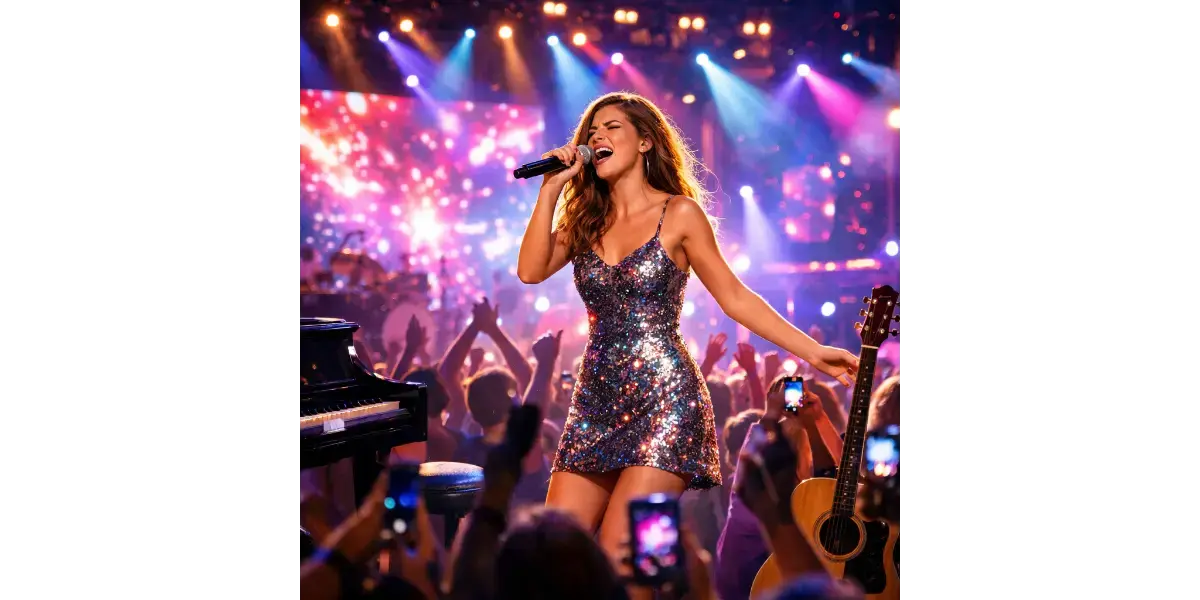
From her country roots with a guitar in hand to selling out stadiums on the Eras Tour, Taylor Swift has become one of the most defining voices of our generation. It’s not just her songwriting that captivates millions—it’s the way she delivers those lyrics. Her voice feels like a conversation with a best friend: intimate, clear, and overflowing with emotion. Whether you are a teen singing in your bedroom or a parent looking to help your aspiring vocalist, the appeal of her style is undeniable.

But here is the best news: you don’t need to be born with a “perfect” voice to sound like her. Taylor’s vocal magic isn’t about vocal gymnastics or hitting whistle tones like Mariah Carey. Instead, it relies on smart, learnable techniques like specific diction, dynamic storytelling, and a masterful use of "mix voice." A beautiful voice is not a gift given to only a few. Breathtaking sounds and strong vocal muscles aren’t always something you are born with. But they are something you can learn to build with practice.

In this guide, we are going to break down exactly how to sing like Taylor Swift. We will explore the specific tools she uses—like vocal twang and mix voice—and give you safe, beginner-friendly exercises to help you master them. By understanding the mechanics behind the Taylor Swift vocal style, you can stop just listening and start sounding like the artist you admire, all while keeping your own unique tone healthy and strong.

The Foundations of the Taylor Swift Vocal Style

Before we jump into vocal exercises, we need to understand what we are actually aiming for. Taylor Swift’s voice has evolved over the years, moving from the heavy country twang of her debut album to the polished pop of 1989 and the indie-folk breathiness of folklore. However, a few core elements remain consistent throughout her career.

1. Conversational Storytelling

At her core, Taylor is a storyteller. Her singing often sounds like speech. She prioritizes the lyrics above all else, ensuring every word is understood. This is why her fans feel so connected to her; she isn't just singing at them, she is talking to them.

2. Clear Diction

Have you ever noticed how crisp her consonants are? Unlike some pop stars who slur words for stylistic effect (like Ariana Grande might do for flow), Taylor enunciates. Her "T"s are sharp, and her vowels are often bright. This clarity is a hallmark of the Taylor Swift vocal style.

3. The "Girl Next Door" Tone

Taylor rarely uses heavy vibrato or operatic resonance. Her tone is generally bright, forward, and accessible. She keeps the sound right at the front of her mouth, often using a technique called "twang" (which we will discuss shortly) to cut through the mix without needing to scream.

Mastering "Mix Voice": The Secret to Taylor’s High Notes

One of the most common questions aspiring singers ask is: "How does she hit those high notes without sounding like she's straining?" The answer lies in the mix voice.

What is Mix Voice?

Imagine your voice has a basement (Chest Voice) and an attic (Head Voice).

  • Chest Voice is your speaking voice—it feels thick, rumbly, and strong. You use this for low notes.
  • Head Voice is your light, airy, "Mickey Mouse" voice. You use this for high notes.

If you try to pull your heavy Chest Voice up too high, you will crack or strain. If you switch to Head Voice too early, it sounds weak and breathy. Mix Voice is the bridge between the two. It blends the power of the chest with the ease of the head voice. It allows you to sing high notes that sound strong but feel easy.

How Taylor Uses Mix Voice

In a song like "Lover," Taylor spends a lot of time in her mix. When she sings the chorus, she isn't yelling in her chest voice, nor is she flipping into a weak falsetto. She is balancing the two. This protects her vocal cords from damage while still sounding emotive and powerful.

Exercise: Finding Your Mix

To find your mix, you need to trick your brain into letting go of the heavy weight of your chest voice.

  1. The "Nasty Nay": Make a bratty, playground teasing sound, like "Nay, Nay, Nay!"
  2. The Slide: Say "Nay" on a low note and slide up to a high note like a siren, keeping that "bratty" sound.
  3. The Result: The "bratty" sound keeps your vocal cords coming together cleanly (which adds power) but thins them out so you can reach high pitches. Once you feel that connection, you can drop the "nasty" tone and sing a normal vowel, maintaining that same feeling of placement.

The Power of "Twang": It’s Not Just for Country

Even though Taylor has moved away from country music genres, she still uses a technique called vocal twang.

What is Twang?

In vocal pedagogy, twang isn't just a genre style; it is an anatomical action. It involves narrowing a part of your throat called the Aryepiglottic Sphincter (AES).

Think of a garden hose. If you put your thumb over the end of the hose, the water shoots out faster and further, even though you didn't turn up the tap. Twang does the same for your voice. By narrowing the AES funnel, you create a sharp, clear sound that projects easily.

Why It’s Safe

Twang is often confused with nasality, but they are different. Nasality happens in the nose; twang happens in the throat. When done correctly, twang is incredibly safe and efficient. It allows you to sing louder and clearer with less effort. Taylor uses this to make her voice "cut" through heavy pop production in songs like "We Are Never Ever Getting Back Together" or "Shake It Off."

Exercise: The Duck Quack

To feel twang, try this simple (and silly) exercise:

  1. Pretend you are a duck and let out a sharp "Quack!"
  2. Notice how the sound feels small and focused, right behind your nose or teeth? That is twang.
  3. Try singing a line from a Taylor song, like "We never go out of style," using that quacky coordination. It will sound funny at first!
  4. Slowly relax the "quack" but keep the clarity. You will find the notes come out much easier.

Diction and Phrasing: Acting the Song

Learning how to sing like Taylor Swift requires you to become an actor. Taylor creates intimacy by treating verses differently than choruses.

The Conversational Verse

In songs like "Cardigan" or "Style," the verses are often sung with a bit of breathiness and a lower volume. She speaks the lyrics on pitch.

  • Tip: Don't try to "sing" the verses too beautifully. Speak them. Focus on the rhythm of the words. Imagine you are whispering a secret to a friend.

The Dynamic Chorus

When the chorus hits, Taylor switches gears. She drops the breathiness and uses more "flow phonation" (a balance of air and muscle) and twang. This contrast creates an emotional journey for the listener.

  • Tip: Save your energy. If you sing the verse at 100% volume, you have nowhere to go for the chorus. Start at 40%, and jump to 80% for the hook.

Crisp Consonants

Taylor uses consonants to launch her sound. In "Blank Space," listen to the line "Nice to meet you, where you been?" She hits the 'T's and 'K's hard. This percussive diction adds rhythm and energy to the song, driving it forward even without drums.

6 Steps to Build Your Taylor-Esque Routine

If you want to sound like Taylor, you need a routine that builds these skills safely. Everyone is born with a different voice and vocal range, they just need to engage with it well. Here is a step-by-step plan for your practice sessions.

Step 1: Warm Up Gently

Never start singing full songs cold. Start with lip trills (blowing air through your lips like a horse). Slide up and down your range gently. This wakes up your breath support and relaxes the lips.

Step 2: Practice Breath Control

Taylor has incredible stamina. Practice the "Hiss" exercise: inhale deeply (letting your belly expand, not your shoulders), and exhale on a "sssss" sound. Time yourself. Can you last 15 seconds? 20? 30? Consistent airflow is the fuel for your singing engine.

Step 3: Find Your "Forward" Placement

Hum an "Mmmm" sound. Do you feel a buzz on your lips? That is forward resonance. Taylor’s voice lives here. If you feel the vibration in your throat, you are swallowing the sound. Bring it forward to the lips to get that bright, pop tone.

Step 4: The "Ney Ney" Scale for Mix

To build that mix voice, sing a 5-tone scale (1-2-3-4-5-4-3-2-1) using the syllable "Ney." The "N" consonant helps bring the cords together, and the "Ey" vowel encourages that twangy, forward placement. Keep it bratty!

Step 5: Song Application

Pick a Taylor Swift song.

  • Verse: Read the lyrics out loud as if they were a poem. Then, sing them with that same speaking energy.
  • Chorus: Add a little "quack" (twang) to the high notes to help them pop out without straining.

Step 6: Cool Down

After singing, do some gentle descending slides on a "Yawn" sigh. This relaxes the throat muscles and resets your voice.

Common Mistakes to Avoid

As you practice the Taylor Swift vocal style, watch out for these common pitfalls.

1. Belting Too High (Yelling)

Many beginners hear Taylor’s high notes and try to yell them in their chest voice. This is painful and dangerous. If you feel a tickle, scratch, or need to cough, stop immediately. You are likely pushing too hard. Use the "Mix Voice" exercises above to thin out the sound as you go higher.

2. Over-Imitating

It is great to learn from Taylor, but don't lose you. Taylor Swift sounds unique because she embraces her own tone. Use her techniques (diction, twang, mix), but let them filter through your own natural voice. The world doesn't need a copy; it needs your version.

3. Ignoring the Breath

Pop singing sounds conversational, so people often forget to breathe deeply. But even conversational singing requires support. If you run out of air, your throat muscles will grab and tighten to compensate. Always inhale low into the belly before you start a phrase.

Frequently Asked Questions

Can anyone learn to sing like Taylor Swift?

Yes! While you cannot change the biological size of your vocal cords (which determines your natural pitch), you can absolutely learn the techniques she uses. Learning how to improve your singing voice is not a quick fix solution; however, with proper exercises for mix voice and diction, anyone can adopt the Taylor Swift vocal style.

What is Taylor Swift’s vocal range?

Taylor is generally considered a Soprano, with a range spanning roughly from C#3 to G5. However, she sings comfortably in a range that is accessible for many female voices (Mezzos and Sopranos). If a song is too high or low for you, don't be afraid to change the key!

Do I need to play guitar to sing like her?

Not at all. While playing an instrument helps with musicianship, the vocal techniques of twang, mix, and phrasing apply whether you are playing an acoustic guitar or singing to a karaoke track.

How long does it take to learn mix voice?

It varies for everyone. For some, it clicks in a few weeks; for others, it takes months of muscle memory building. The art of learning how to sing is learning how to work with the tools you already have. Be patient with yourself and practice consistently.

Ready to Find Your Voice?

Taylor Swift didn’t become a global superstar overnight. She took voice lessons, practiced relentlessly, and refined her craft over decades. Your voice has the potential to be an amazing instrument. You don’t need to pack it in a bag, load it in a van, or worry about it falling offstage. The greatest instrument in the world is sitting right inside you—you just need the right guidance to unlock it.

If you are ready to stop guessing and start improving, professional feedback is the fastest way to grow. Whether you want to master the mix voice, perfect your pop twang, or just gain the confidence to sing your favorite "Eras" setlist, we are here to help.

Start your vocal journey today. Sign up for a [free trial singing lesson] at VoiceLessons.com and discover what your voice can truly do!


About the author

Mike Elson

Mike Elson

Mike loves to sing and make magic happen with computers and music. After trying lots of ways that didn't work to find his head voice, his voice ended up broken and his concepts mixed up. 

Read more