Your voice has the potential to be an amazing instrument. You do not need to carry it or worry about maintaining it like other instruments. It is already part of you. Like any instrument, learning how to use it takes patience, consistency, and the right approach.
If you are reading this, you likely enjoy singing but are unsure how to practice effectively at home. You may sing in the car, in the shower, or have a goal such as improving confidence or preparing for a performance.
Many beginners feel unsure about practicing alone. You might worry about using the wrong techniques or not improving. This is normal. Strong vocal ability is not just something you are born with. It is something you build through consistent practice.
This guide will show you how to practice singing at home with simple and effective steps. You will learn how to set up your space, warm up your voice, and build a routine that supports steady improvement.
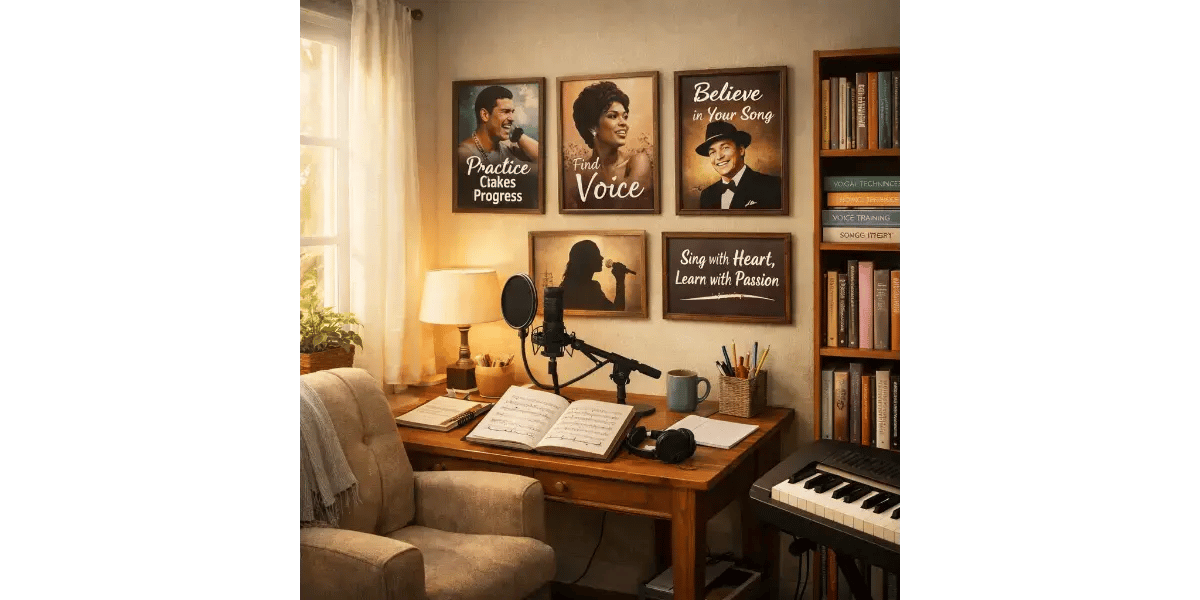
Creating a Practice Space That Works
Before you start singing, create an environment where you feel comfortable.
Finding privacy and comfort
To improve, you need to feel free to make mistakes. If you are worried about being heard, you may hold back and create tension in your voice.
- Bedroom or office: Soft surfaces like curtains, rugs, and furniture help absorb sound
- Closet: Clothes reduce echo and provide a quiet space
- Car: A practical option if your home is noisy
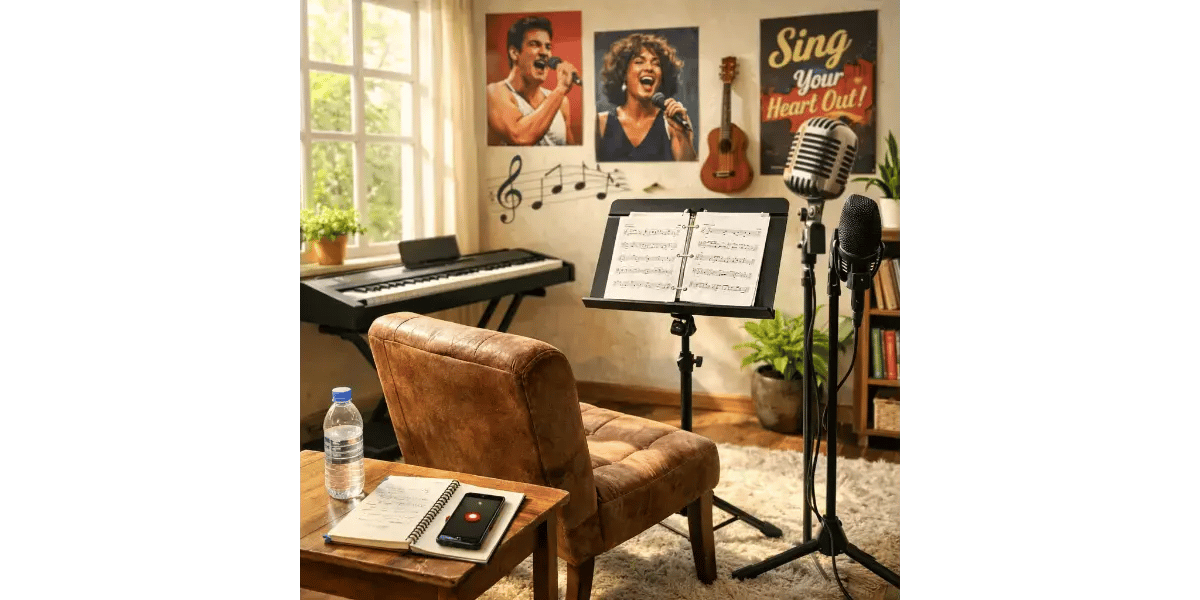
Simple tools that help
You do not need expensive equipment, but a few items make a difference:
- Mirror to check posture and tension
- Water to stay hydrated
- Phone to record your voice for feedback
The Foundation: Posture and Breathing
Your body supports your voice. Good alignment allows sound to flow naturally.
Posture for singing
- Stand tall with relaxed shoulders
- Keep your feet shoulder-width apart
- Avoid locking your knees
- Keep your chin level
This helps reduce tension and improves airflow.
Breathing for support
Singing requires deeper and more controlled breathing than normal speaking.
Try this simple exercise:
- Inhale for four counts and feel your stomach expand
- Hold briefly
- Exhale slowly for four counts
You can also practice the “sss” sound by releasing air steadily. This builds control over your breath.
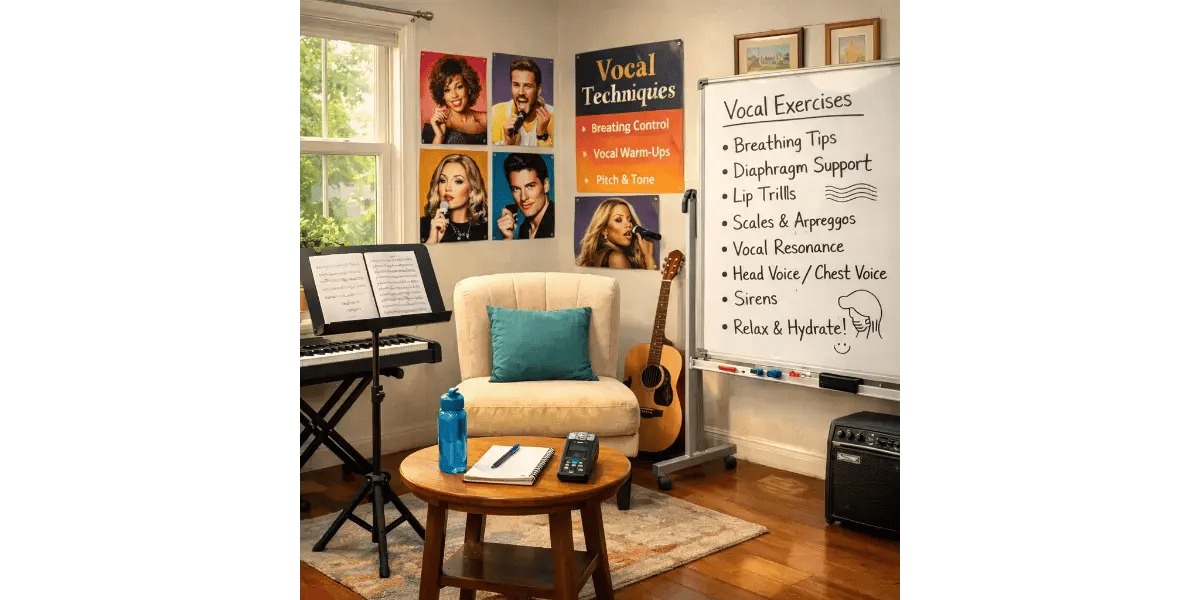
Vocal Warm-Ups
You should always warm up before singing. This protects your voice and improves performance.
Lip trills
Blow air through relaxed lips to create a vibration.
This helps regulate airflow and reduces tension.
Straw phonation
Sing through a straw to create gentle resistance.
This helps your vocal cords work more efficiently with less strain.
Humming and sirens
Hum softly or slide your voice from low to high notes.
Focus on feeling vibration in the front of your face rather than your throat.
A Simple 30-Minute Practice Routine
Consistency is more important than long sessions. A structured routine helps you improve faster.
1. Physical release (5 minutes)
Stretch your neck, shoulders, and body. Release tension before singing.
2. Warm-up (10 minutes)
Use lip trills, humming, and simple scales. Stay in a comfortable range.
3. Technique focus (5 minutes)
Work on one skill at a time, such as:
- Pitch accuracy
- Vowel clarity
- Smooth transitions
4. Song practice (5 minutes)
Break the song into sections:
- Practice difficult lines
- Speak the lyrics first
- Sing on a vowel before adding words
5. Cool down (5 minutes)
End with gentle humming or descending slides to relax your voice.
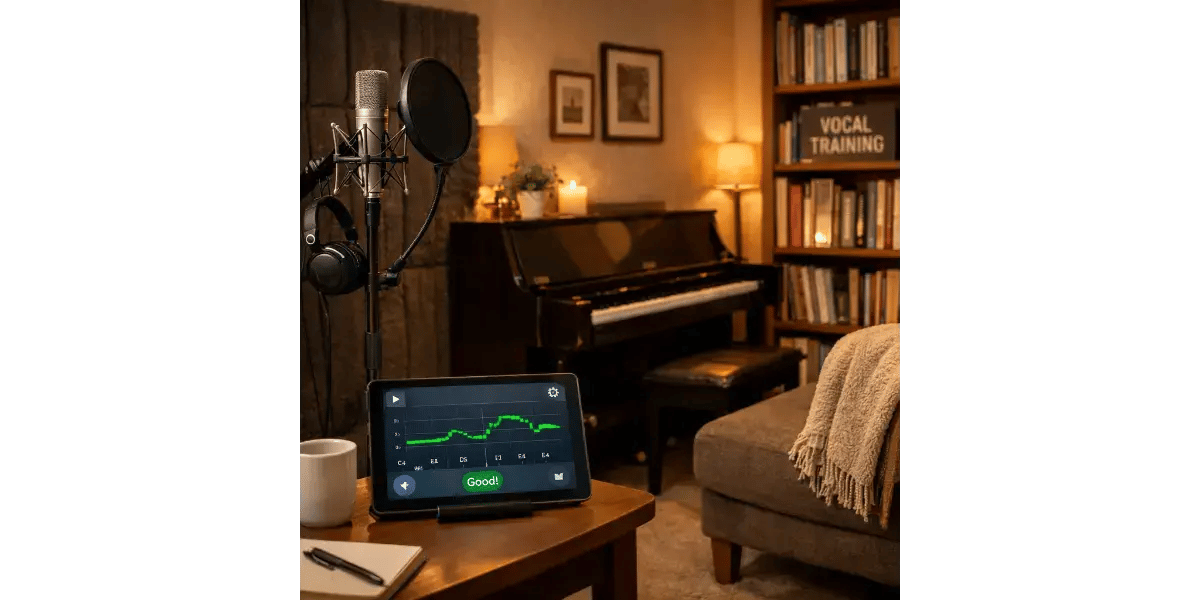
Recording and Reviewing Your Voice
Recording your voice is one of the most effective ways to improve.
When listening back, focus on:
- Pitch accuracy
- Tone quality
- Tension in your voice
Identify one small improvement for your next session.
Vocal Health
Your voice needs proper care to stay strong.
Stay hydrated
Drink water regularly throughout the day. Avoid excessive caffeine and alcohol.
Listen to your body
If your voice feels strained or tired, rest. Do not push through discomfort.
If hoarseness lasts for several weeks, consider consulting a medical professional.
Staying Motivated
Progress takes time. Some days will feel easier than others.
- Set small, achievable goals
- Track your improvements
- Celebrate progress, even small wins
Consistency leads to long-term results.
Final Thoughts
Learning how to practice singing at home is about building habits and understanding your voice.
With the right environment, proper warm-ups, and a consistent routine, you can improve steadily and confidently.
Ready to Improve Your Singing
If you want faster progress and personalized feedback, working with a vocal coach can help.
Start with a demo